These peach pips are an excellent way to mulch your flower beds. They provide protection from the sun, keeping roots moist and shaded.
Guide: 1m3 of peach pips will spread over 10m2 at a depth of 10cm, or to 20m2 at a depth of 5cm.
Out of stock
These peach pips are an excellent way to mulch your flower beds. They provide protection from the sun, keeping roots moist and shaded.
There are about 13 x (36kg) bags in a cube.
Or 30 x (15.5kg) bags in a cube.
These peach pips are an excellent way to mulch your flower beds. They provide protection from the sun, keeping roots moist and shaded.
Guide: 1m3 of peach pips will spread over 10m2 at a depth of 10cm, or to 20m2 at a depth of 5cm.
Shipping Countries: South Africa
Shipping States: Western Cape (South Africa), Mpumalanga (South Africa), Gauteng (South Africa), Eastern Cape (South Africa), North West (South Africa), Limpopo (South Africa), Free State (South Africa), Northern Cape (South Africa), KwaZulu-Natal (South Africa)
Ready to ship in 1-3 business days
Shipping Policy
This plant/s are sold by horti.co.za direct. We will process your order within 1-3 business days.
Many of our plants can be couriered nationwide - and at checkout these options will be displayed. IF couriering doesn't come up as an option, this means that your basket contains one or more items that cannot be couriered - due to size/or practical reasons.
In this case, please either remove from your basket, or contact us for help.
For example, our horse compost cannot be sent via courier and will therefore appear as click and collect only!
NB: We normally send the plants on a Monday or Tuesday to minimise the chance they'll get stuck in a depot over the weekend.
We offer click and collect for local customers only. :-)
Refund Policy
No refunds on click & collect goods.
Normal refund policy (see terms and conditions) on other 'delivery' products.
| volume-weight | 36kg bag, 1cube |
|---|
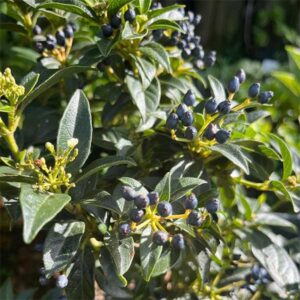
Viburnum tinus ‘Compacta’ – A Compact Evergreen Beauty
Viburnum tinus ‘Compacta’ is a dense, evergreen shrub valued for its neat growth habit, glossy foliage, and clusters of delicate flowers that brighten the garden during the cooler months. This compact cultivar of Viburnum tinus is widely appreciated for its versatility in hedges, borders, and containers, making it an excellent choice for both formal and informal gardens.
Viburnum tinus ‘Compacta’ forms a rounded, bushy shrub with smaller, tighter growth than the standard species. Its dark green, leathery leaves are oval-shaped and glossy, creating an attractive backdrop for the plant’s winter blooms. From late autumn through winter and into early spring, tight clusters of pink buds open into small, star-like white flowers that provide subtle colour and charm when few other plants are flowering.
After flowering, the plant produces small metallic-blue berries that add further ornamental interest and attract birds to the garden.
For sale in South Africa.
Japanese Anemone
A beautiful, elegant, white flower produced in Autumn. These dainty flowers bob gently in the breeze.
It likes partial shade and humus-rich, moist, well drained soil. They can be grown in (partial) full sun as long as the soil is not allowed to dry out.
For sale in South Africa. Couriered nationwide.
(Blue Fescue / Blue Ornamental Grass)
Add year-round colour and texture to your garden with Festuca glauca, a compact ornamental grass prized for its striking clumps of fine, silvery-blue foliage. Its neat, rounded growth habit creates a beautiful contrast against green foliage, flowering perennials and colourful shrubs. In summer, delicate flower spikes rise above the foliage, adding height and movement to this attractive, low-maintenance grass.
Perfect for rockeries, garden borders, gravel gardens and containers, Blue Fescue is an excellent choice for water-wise planting in South African gardens. It thrives in full sun, where its distinctive blue colouring is most pronounced, and prefers well-drained soil. Once established, it tolerates dry conditions and requires little attention. Avoid overwatering, particularly in heavy clay soils, as poor drainage can cause the roots to rot.
Festuca glauca is especially effective when planted in groups along pathways or among stones, where its cool blue tones provide year-round interest. Trim away old or untidy foliage to keep the clumps looking fresh, and divide established plants when they become congested.
Late spring to summer
Full sun – essential for the best blue foliage colour
Low to moderate – water regularly while establishing, then sparingly once established
20–30 cm high × 25–35 cm wide
Good – tolerates frost and cold conditions
For the strongest blue colour, plant Festuca glauca in a sunny position with excellent drainage. Cut back dead foliage in late winter or early spring to encourage fresh growth.