



Agave Titanota
1 in stock
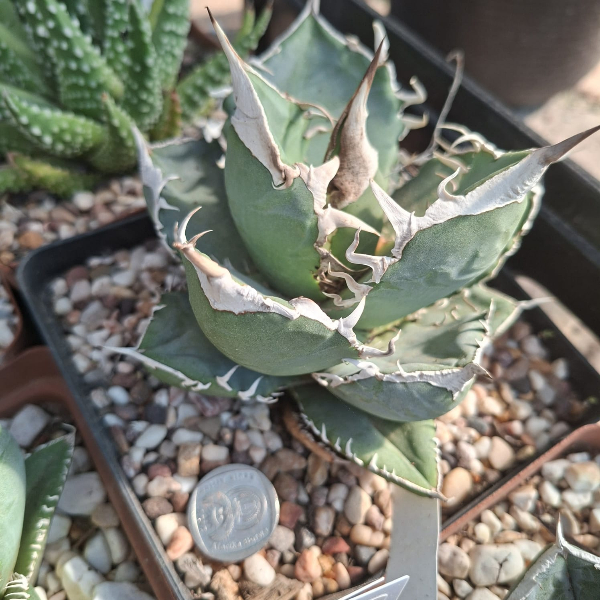
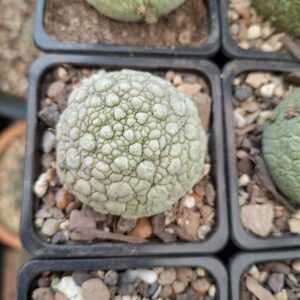
Agave titanota is ’n baie gewilde, stadig-groeiende vetplant uit die Asparagaceae-familie en is inheems aan die semi-droë streke van Oaxaca, Meksiko. Hierdie spesie is bekend vir sy indrukwekkende, beeldhoukundige vorm en het breë, dik blare wat wissel van blougrys tot silwerig-groen, met opvallende, dramatiese tande langs die blaarrande en ’n kenmerkende eindsteek. Die blare vorm dikwels ’n digte roset, wat dit gewild maak onder versamelaars en landskapontwerpers. Dit groei die beste in volson en goed dreinerende grond, en is uiters droogtebestand sodra dit gevestig is. Water slegs wanneer die grond heeltemal droog is. Hoewel dit taai is, moet Agave titanota teen uiterste koue en ryp beskerm word. Met verloop van tyd kan dit uitlopers rondom die basis vorm, en soos alle agaves blom dit slegs een keer in sy leeftyd—gewoonlik ná baie jare—en sterf daarna af, maar laat ’n nuwe generasie agter deur die uitlopers.
R400.00
1 in stock
Ready to ship in 3-5 business days
Shipping Policy
**Shipping Policy for Plants**
At MantisPlants, we take great care in preparing and shipping your plants to ensure they arrive in the best possible condition.
Bare Root Shipping
All plants are typically shipped bare-rooted, meaning that the soil is carefully removed from the roots to prevent any damage during transit. We wash the roots to remove any remaining soil and allow them to dry before wrapping them gently in tissue paper. This process helps minimize stress on the plant and ensures its safe arrival to you.
Pot Shipping Option (Not Recommended)
While we do offer the option of shipping some plants in their pots, this is generally not advisable. Shipping a plant in its pot can result in root damage due to movement and stress during transit. The roots can become constricted or disturbed, which can harm the plant. If you are still interested in this option, it must be arranged in advance with the vendor, and we will take extra precautions to pack it as securely as possible. However, we highly recommend the bare-root shipping method to ensure the best possible outcome for your plant.
**Careful Packaging**
We take pride in our packing process to ensure your plant arrives safely. Every plant is carefully packed, with extra attention to detail to protect the roots and foliage. We take care to secure the plant during transit, and make sure it is cushioned and stabilized inside the shipping box to avoid damage.
Our goal is to make sure your plant reaches you healthy and ready to thrive! If you have any questions about the shipping process, feel free to reach out to us.
| Weight | 0.3 kg |
|---|---|
| pot size | 7.5cm |
Based on 0 reviews
Only logged in customers who have purchased this product may leave a review.
Product Location
oudthoorn, South Africa-
Plants, Succulents & Cacti
Tylecodon reticulatus
Oudtshoorn, WC
Tylecodon reticulatus (Skeleton Plant / Netwerk-tolbos)
A truly fascinating succulent, Tylecodon reticulatus is known for its thick, pale, knotted stems that develop a cracked, net-like texture with age—giving it a rugged, almost skeletal appearance. In the dry season, it sheds its leaves, leaving behind an intricate framework that adds striking character to any collection. When in growth, it produces small, tubular greenish flowers held above the plant on tall stems.
This winter-growing species is perfect for collectors who appreciate unusual forms. It thrives in bright light, well-draining soil, and requires careful watering during its active season.
Interesting fact:
Tylecodon reticulatus is dormant in summer and grows in winter—the opposite of most plants—making its care cycle uniquely adapted to arid South African climates.SKU: n/a -
Plants, Succulents & Cacti
Adromischus marianiae var. herrei
Oudtshoorn, WC
Adromischus marianiae var. herrei is a unique, slow-growing succulent with thick, warty leaves that range in color from green to reddish-brown. This drought-tolerant plant is perfect for rock gardens or containers and thrives in bright light with minimal water.
SKU: 1-1-2-1-2-1-1-1-1 -
Plants, Succulents & Cacti
Cereus Peruvianus f. monstruosa variegata
Oudtshoorn, WC
Cereus peruvianus f. monstruosa variegata is a striking, fast-growing cactus known for its unusual, contorted “monstrose” stems and beautiful variegated coloring in shades of green, cream, and white. Its bold, architectural form makes it a standout specimen for gardens, containers, and succulent collections. This hardy cactus thrives in full sun and well-drained soil and may produce large, fragrant white flowers during the summer.
SKU: n/a -
Plants, Succulents & Cacti
Euphorbia Neurobella, Red Monadenium (Rare, 10 Years old)
Oudtshoorn, WC
Euphorbia neurobella (Red Monadenium)
A striking and unusual succulent, Euphorbia neurobella is admired for its thick, sculptural stems and rich reddish tones that intensify in bright light. Its knobbly, textured surface gives it a bold, almost otherworldly appearance, making it a standout piece in any collection. During its growing season, it produces small, delicate flowers that add subtle charm to its rugged form.
Perfect for collectors looking for something different, this plant thrives in warm, bright conditions with well-draining soil and light watering.
Interesting fact:
Euphorbia neurobella was once classified under the genus Monadenium, which is why it’s still commonly known as “Red Monadenium” among collectors.SKU: n/a


Related products
-
Plants, Succulents & Cacti
Astrophytum Myriostigma Nudum 5 RIB
Oudtshoorn, WC
Astrophytum Myriostigma Nudum is very similar to the other myriostigma, it only deviate from the well-known typical form for lacking or mostly lacking white flecks, giving a bright green, blue-green, gray-green or mauve-green color overall depending on clones.
SKU: n/a -
Plants, Succulents & Cacti
Kalanchoe beharensis ‘Fang’
Raithby, WC
Kalanchoe beharensis ‘Fang’
Noted for its eccentric appearance, award-winning Kalanchoe beharensis ‘Fang’ (Felt Plant) is a bushy, often tree-like perennial succulent, with velvety, triangular to lance-shaped, long-stalked leaves. Bronze or green on the upper surface, with silver-gray undersides, the large fleshy leaves, up to 4 in.
For sale in South Africa.
SKU: n/a -
-
Plants, Succulents & Cacti
Gasteria Batesiana
Oudtshoorn, WC
Gasteria Batesiana, a striking succulent native to the rocky terrains of South Africa, is a must-have for any plant enthusiast. With its thick, glossy, dark green leaves adorned with pale white spots, it adds a touch of the exotic to any collection. This hardy plant thrives in well-draining soil and enjoys bright, indirect light. Minimal watering is required, making it perfect for low-maintenance care. Its unique appearance and resilience make Gasteria Batesiana a captivating addition to both indoor and outdoor gardens.
SKU: n/a



There are no reviews yet.