Viburnum tinus ‘Compacta’ – A Compact Evergreen Beauty
Viburnum tinus ‘Compacta’ is a dense, evergreen shrub valued for its neat growth habit, glossy foliage, and clusters of delicate flowers that brighten the garden during the cooler months. This compact cultivar of Viburnum tinus is widely appreciated for its versatility in hedges, borders, and containers, making it an excellent choice for both formal and informal gardens.
Appearance
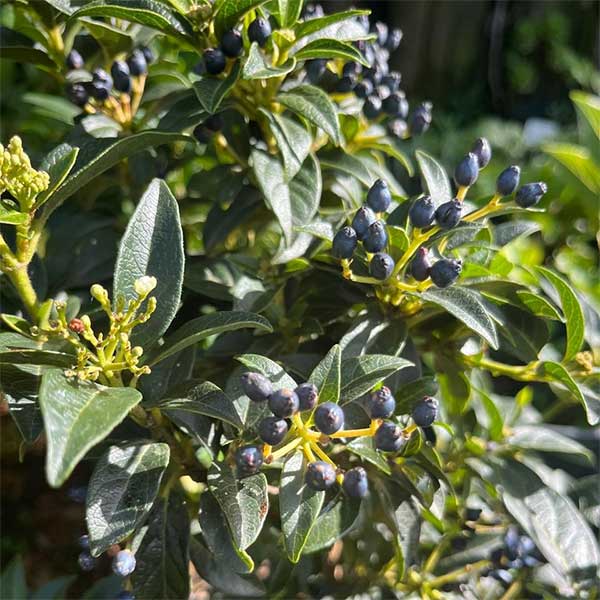
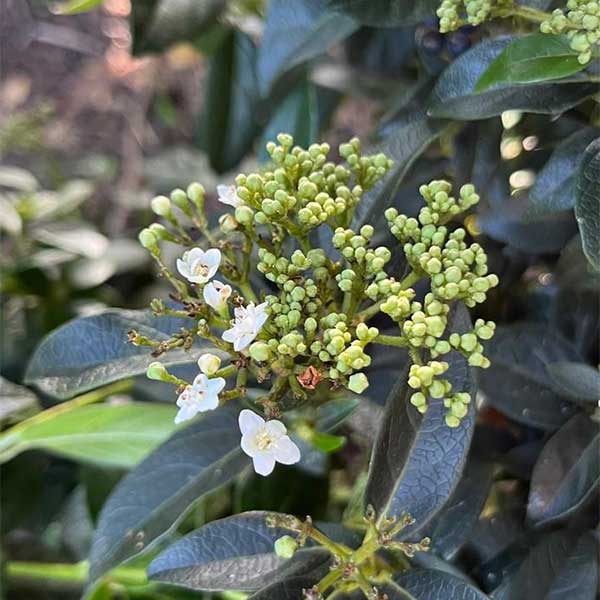
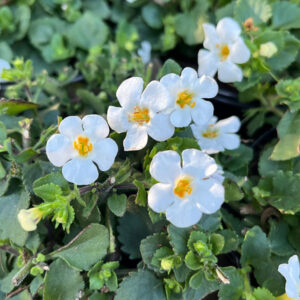
Viburnum tinus ‘Compacta’ forms a rounded, bushy shrub with smaller, tighter growth than the standard species. Its dark green, leathery leaves are oval-shaped and glossy, creating an attractive backdrop for the plant’s winter blooms. From late autumn through winter and into early spring, tight clusters of pink buds open into small, star-like white flowers that provide subtle colour and charm when few other plants are flowering.
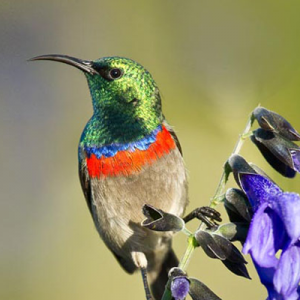
After flowering, the plant produces small metallic-blue berries that add further ornamental interest and attract birds to the garden.
Growth Habit and Size
As its name suggests, Viburnum tinus ‘Compacta’ is more compact than the typical species. It generally grows to about 1–1.5 metres high and wide, forming a dense, rounded shrub. Its tidy shape makes it especially suitable for low hedges, foundation plantings, and container growing.
The shrub responds well to pruning and can be shaped easily to maintain a neat appearance.
Climate and Growing Conditions
Viburnum tinus ‘Compacta’ performs best in temperate to Mediterranean-type climates and is well suited to many regions of South Africa. It tolerates light frost, coastal conditions, and moderate wind, making it a reliable garden plant.
For optimal growth, plant it in well-drained soil enriched with organic matter. Although adaptable, it prefers slightly moist soils and benefits from regular watering during dry periods.
Light Requirements
This shrub grows well in full sun to partial shade. In warmer climates, a position with morning sun and afternoon shade can help maintain lush foliage and prolonged flowering.
Watering and Feeding
Young plants should be watered regularly while establishing their root systems. Once established, Viburnum tinus ‘Compacta’ is moderately drought tolerant, though it performs best with consistent moisture.
Applying a balanced organic fertiliser in spring helps encourage healthy growth and abundant flowering.
Maintenance
Maintenance is minimal. Light pruning after flowering will help maintain the plant’s compact shape and encourage dense growth. Removing dead or weak branches keeps the shrub healthy and attractive.
Mulching around the base of the plant helps conserve moisture and regulate soil temperature.
Garden Uses
Thanks to its tidy growth and evergreen foliage, Viburnum tinus ‘Compacta’ is a highly versatile landscape plant. It works beautifully as:
-
A low evergreen hedge
-
A foundation shrub near buildings
-
A container plant for patios and balconies
-
A mixed shrub border plant
-
A screen or informal hedge
Its winter flowers provide valuable seasonal interest and a subtle source of nectar for pollinating insects.
Why Grow Viburnum tinus ‘Compacta’?
Gardeners appreciate this shrub for its reliable performance, evergreen foliage, and winter blooms. With its manageable size and adaptability, Viburnum tinus ‘Compacta’ is an excellent choice for gardeners seeking a low-maintenance, year-round ornamental shrub that fits comfortably into smaller spaces while still offering beauty and structure.