




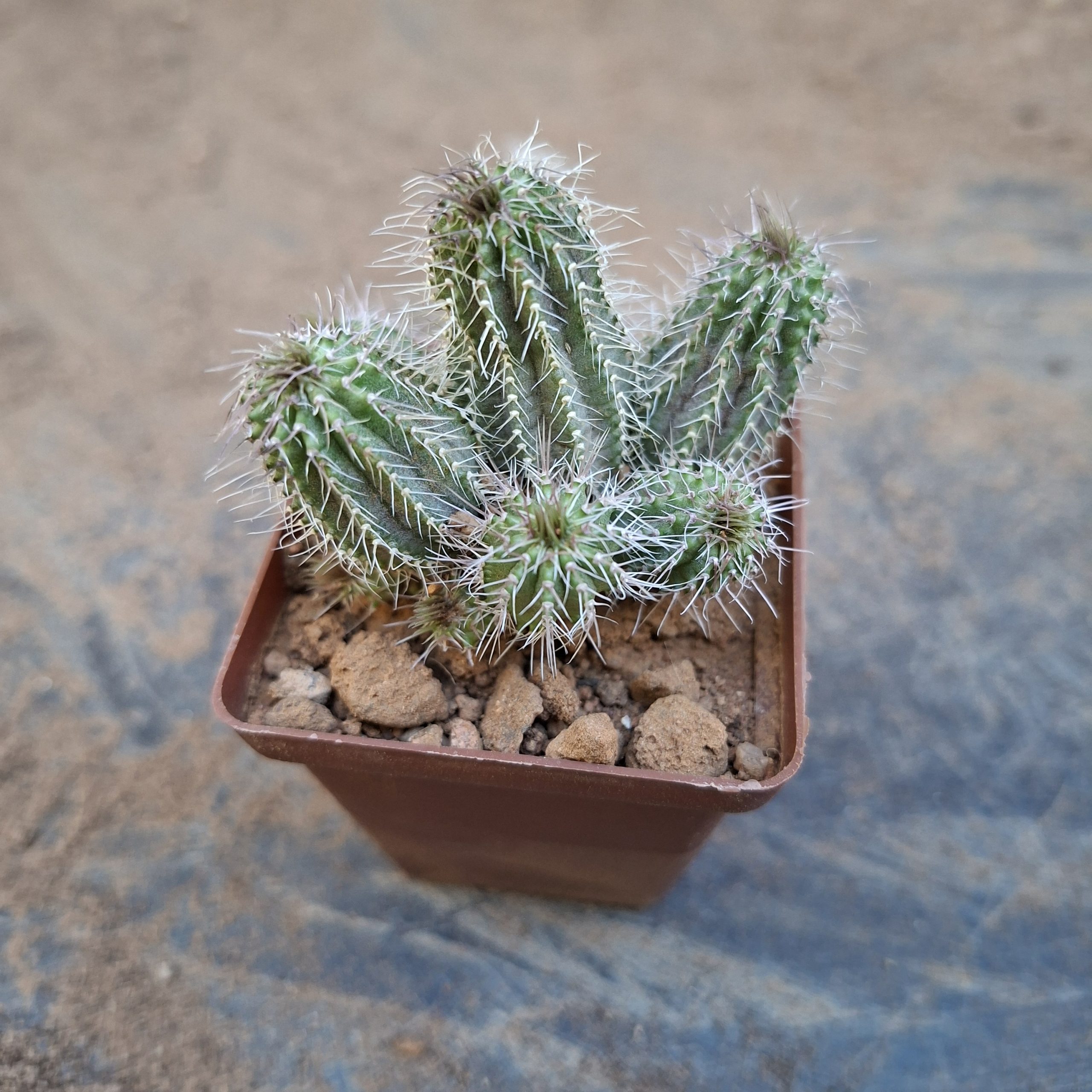
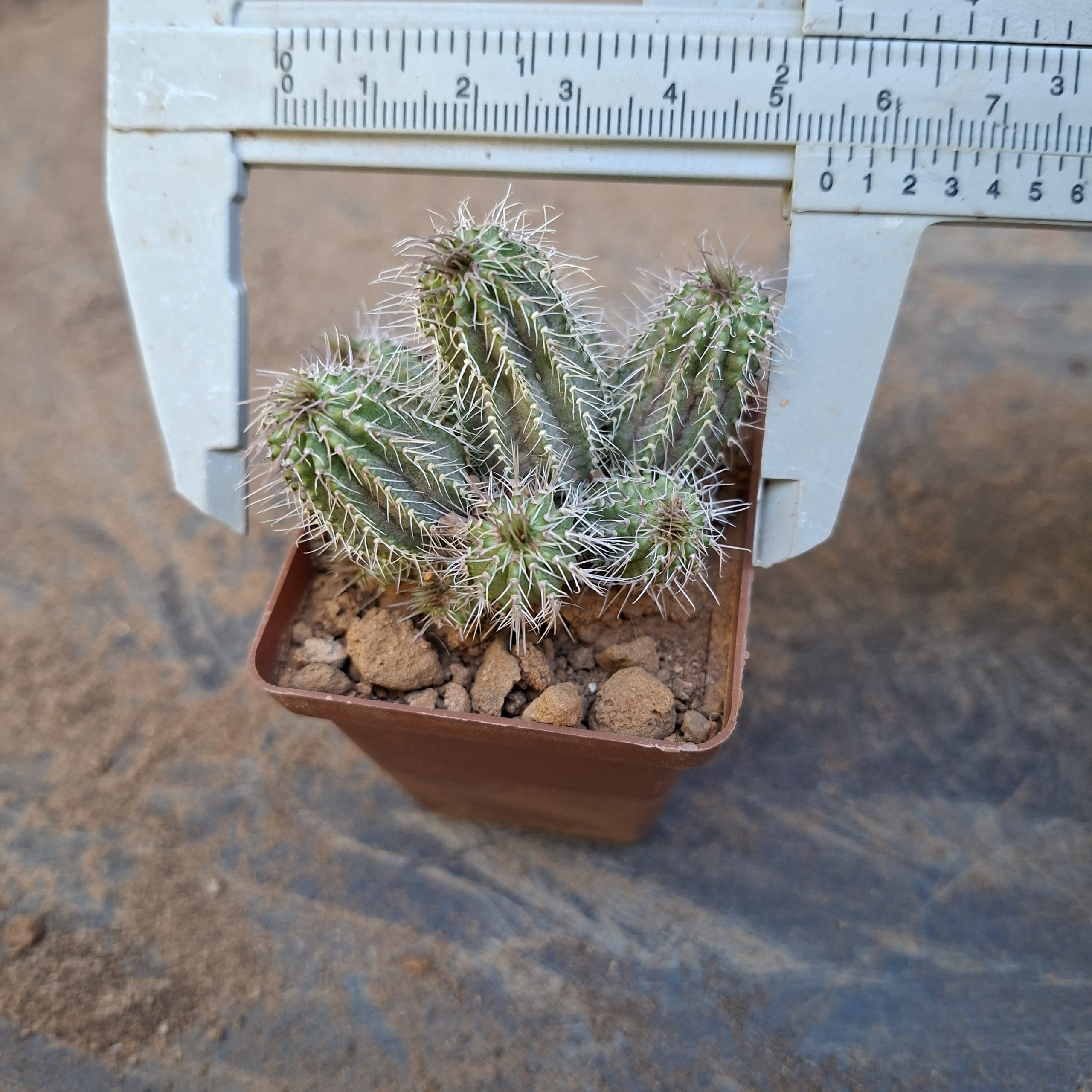
Tavaresia barklyi Minor
3 in stock
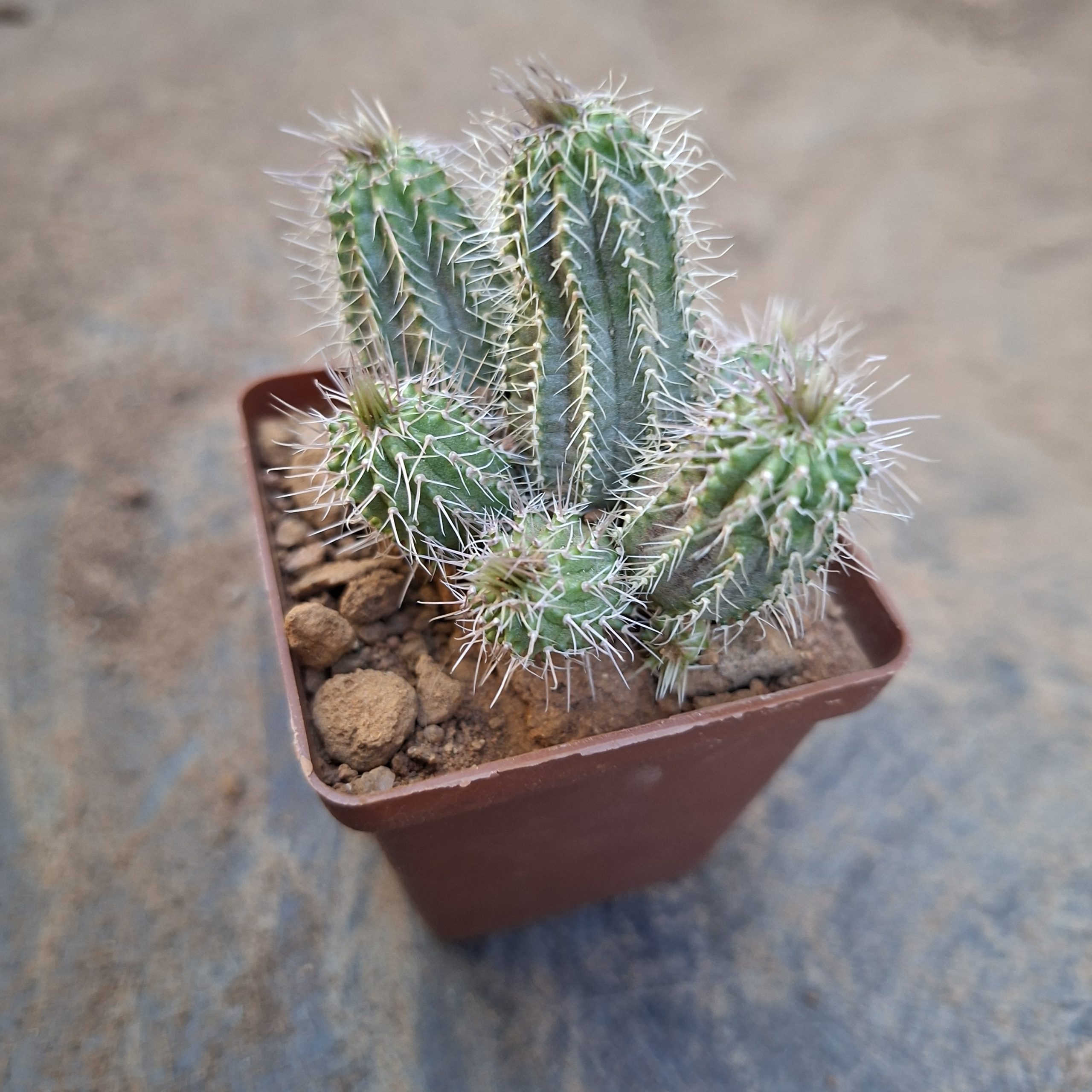
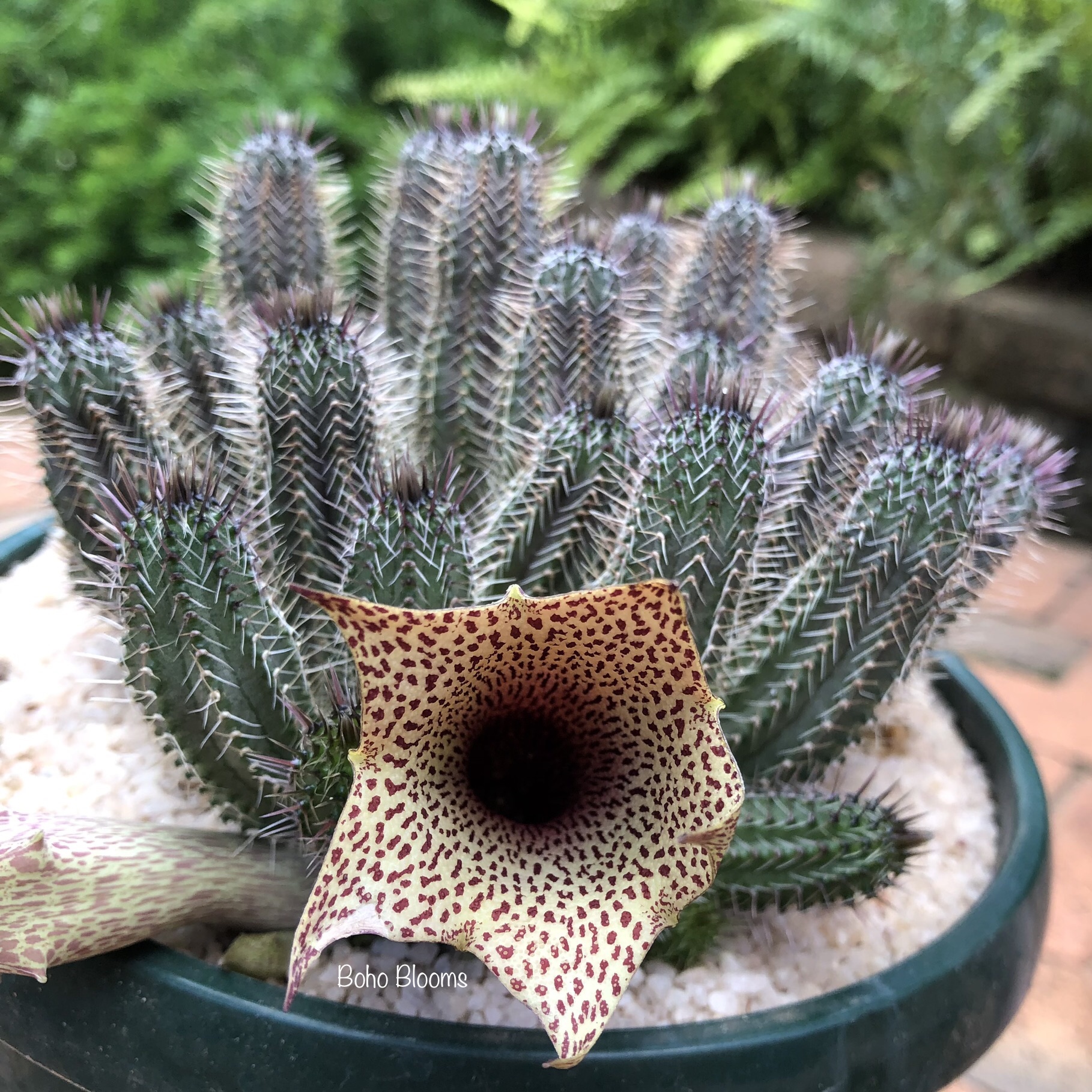
Tavaresia barklyi minor is a fascinating and rare succulent from the dry regions of Namibia. This miniature cactus is known for its small, thick, and spineless stems that form a dense cluster, giving it a unique, rounded appearance. The stems are a pale green color and often develop a distinctive, ridged texture. In late spring or early summer, it produces small, creamy white to pale yellow flowers that bloom from the top of the plant, adding a delicate touch to its sturdy form. Interesting fact: Despite its compact size, Tavaresia barklyi minor is extremely drought-tolerant and can survive with minimal water, making it perfect for collectors who want a low-maintenance plant that thrives in bright, well-drained conditions.
R150.00
3 in stock
Tavaresia barklyi minor is ‘n fascinerende en seldsame vetplant wat oorspronklik uit die droë streke van Namibië kom. Hierdie miniatuurkaktus is bekend vir sy klein, dik en doornlose stamme wat ‘n digte kluster vorm, wat dit ‘n unieke, afgeronde voorkoms gee. Die stamme is ‘n liggroen kleur en ontwikkel dikwels ‘n kenmerkende, gegroefde tekstuur. In die laat lente of vroeë somer, produseer dit klein, roomwit tot liggeel blomme wat bo-op die plant blom, wat ‘n delikate aksent by sy taai vorm voeg. Interessante feit: Ten spyte van sy kompakte grootte, is Tavaresia barklyi minor uiters droogtebestand en kan dit met minimale water oorleef, wat dit perfek maak vir versamelaars wat ‘n lae-onderhoudsplant wil hê wat floreer in helder, goed gedreineerde toestande.
Shipping States: Mpumalanga (South Africa), Limpopo (South Africa), KwaZulu-Natal (South Africa), Gauteng (South Africa), Western Cape (South Africa), Free State (South Africa), North West (South Africa), Eastern Cape (South Africa), Northern Cape (South Africa)
Ready to ship in 3-5 business days
Shipping Policy
**Shipping Policy for Plants**
At MantisPlants, we take great care in preparing and shipping your plants to ensure they arrive in the best possible condition.
Bare Root Shipping
All plants are typically shipped bare-rooted, meaning that the soil is carefully removed from the roots to prevent any damage during transit. We wash the roots to remove any remaining soil and allow them to dry before wrapping them gently in tissue paper. This process helps minimize stress on the plant and ensures its safe arrival to you.
Pot Shipping Option (Not Recommended)
While we do offer the option of shipping some plants in their pots, this is generally not advisable. Shipping a plant in its pot can result in root damage due to movement and stress during transit. The roots can become constricted or disturbed, which can harm the plant. If you are still interested in this option, it must be arranged in advance with the vendor, and we will take extra precautions to pack it as securely as possible. However, we highly recommend the bare-root shipping method to ensure the best possible outcome for your plant.
**Careful Packaging**
We take pride in our packing process to ensure your plant arrives safely. Every plant is carefully packed, with extra attention to detail to protect the roots and foliage. We take care to secure the plant during transit, and make sure it is cushioned and stabilized inside the shipping box to avoid damage.
Our goal is to make sure your plant reaches you healthy and ready to thrive! If you have any questions about the shipping process, feel free to reach out to us.
| Weight | 0.3 kg |
|---|---|
| pot size | 7.5cm |
Tavaresia barklyi minor is a fascinating and rare succulent from the dry regions of Namibia.
Based on 0 reviews
Only logged in customers who have purchased this product may leave a review.
Product Location
oudthoorn, South Africa-
Plants, Succulents & Cacti
Ariocarpus Retusus
Oudtshoorn, WC
Ariocarpus retusus is a slow-growing, rare cactus native to the limestone-rich regions of Mexico. Known for its unique, rosette-shaped growth, it has triangular, smooth, gray-green tubercles that give it a stone-like appearance. It produces stunning white or pale pink flowers, typically in autumn, making it a sought-after species among collectors. This drought-tolerant plant thrives in well-draining soil and requires minimal water, making it ideal for xerophytic gardening.
SKU: n/a -
Plants, Succulents & Cacti
Crassulla Ovata
Oudtshoorn, WC
Crassula ovata, algemeen bekend as die Jadeplant of Geldboom, is ’n gewilde vetplant wat inheems is aan Suid-Afrika en Mosambiek. Dit het dik, vleisige, ovaalvormige groen blare en ’n houtagtige stingel, en groei dikwels tot ’n klein struik of boom. Die plant produseer klein, stervormige wit of pienk blomme in die winter of vroeë lente.
Crassula ovata floreer in helder lig, goed dreinerende grond en benodig matige water—die grond moet tussen waterings droog word. Dit is maklik om binnenshuis of buite in gematigde klimate te kweek en word geglo om voorspoed en geluk te bring.
SKU: n/a -
Plants, Succulents & Cacti
Haworthia Tessellata
Oudtshoorn, WC
Origin: Haworthia Tessellata is native to the arid regions of South Africa and Namibia, where it grows in rocky soils and partial shade.
Care:
- Light: Bright indirect light or partial shade
- Water: Water thoroughly, then allow soil to dry out completely
- Soil: Well-draining cactus or succulent mix
- Temperature: Protect from frost and extreme cold
- Growth: Compact and slow-growing, ideal for small pots and indoor displays
SKU: n/a -
Aloe & Agave, Plants
Queen victoria agave, Agave victoriae-reginae
Oudtshoorn, WC
Agave victoriae-reginae, also known as the Queen Victoria agave, is a stunning, slow-growing succulent native to the Chihuahuan Desert of northern Mexico. This compact plant is admired for its symmetrical rosettes of dark green leaves, each adorned with white markings and a sharp terminal spine. It thrives in well-draining soil, requires full sun to partial shade, and is drought-tolerant, needing only occasional watering. Protect it from frost and overwatering to prevent rot. Ideal for xeriscaping and container gardening, this agave adds elegance to any collection with its unique geometry.
SKU: n/a -
Plants, Succulents & Cacti
Euphorbia Parvimedusae Hybrid (Yellow Flowers)
Oudtshoorn, WC
Euphorbia parvimedusae is sonder twyfel een van die mees opwindende nuwe ontdekkings van die afgelope paar jaar. Dit het op sigself groot ornamentele waarde—maar daar is meer. Hierdie spesie kan ’n sleutelrol speel in die toekomstige teel van struikagtige en stekelrige euphorbias. Net soos E. tulearensis ’n belangrike rol gespeel het in die teel van E. francoisii, kan Euphorbia parvimedusae alle struikagtige Euphorbia-spesies deur hibridisering kompakter en dwergagtig maak. Hierdie proses ontbloot ook soms verborge gene van elke spesie, wat soms tot verrassende resultate lei.
SKU: n/a




Related products
-
Plants, Succulents & Cacti
Haworthia Viscosa Calitzdorp
Oudtshoorn, WC
Haworthia viscosa ‘Calitzdorp’ is a striking succulent known for its compact, triangular leaves arranged in elegant vertical stacks. Native to South Africa, this rare variety features thick, dark green leaves with a smooth, glossy surface, giving it a sculptural, geometric form. Its architectural beauty makes it a standout in any collection, and its slow-growing nature only enhances its appeal. Perfect for collectors of rare succulents, Haworthia viscosa ‘Calitzdorp’ is a symbol of understated elegance and natural resilience.
SKU: n/a -
Plants, Succulents & Cacti
Haworthia Nigra
Oudtshoorn, WC
Haworthia nigra is a little succulent with a big attitude! With its dark, almost black, spiky leaves stacked in tight layers, it looks like it’s ready to join the goth plant club. Native to South Africa, this hardy little character doesn’t need much to thrive but always stands out with its unique look. Perfect for those who appreciate a plant that can rock the “all black everything” vibe!
Care Instructions:
Haworthia nigra prefers bright, indirect light but can tolerate some shade. Plant it in well-draining soil and water sparingly, letting the soil dry out completely between waterings. It grows slowly and enjoys a light monthly feeding of diluted succulent fertilizer during the warmer months. Just remember: too much water makes it sulky!SKU: n/a -
Plants, Succulents & Cacti
Ariocarpus Retusus
Oudtshoorn, WC
Ariocarpus retusus is a slow-growing, rare cactus native to the limestone-rich regions of Mexico. Known for its unique, rosette-shaped growth, it has triangular, smooth, gray-green tubercles that give it a stone-like appearance. It produces stunning white or pale pink flowers, typically in autumn, making it a sought-after species among collectors. This drought-tolerant plant thrives in well-draining soil and requires minimal water, making it ideal for xerophytic gardening.
SKU: n/a -
Plants, Succulents & Cacti
Kalanchoe beharensis ‘Fang’
Raithby, WC
Kalanchoe beharensis ‘Fang’
Noted for its eccentric appearance, award-winning Kalanchoe beharensis ‘Fang’ (Felt Plant) is a bushy, often tree-like perennial succulent, with velvety, triangular to lance-shaped, long-stalked leaves. Bronze or green on the upper surface, with silver-gray undersides, the large fleshy leaves, up to 4 in.
For sale in South Africa.
SKU: n/a


There are no reviews yet.