






Sedum Rubrotincum Succulent (Pork and Beans)
6 in stock
Sedum Rubrotincum Succulent (Pork and Beans)
Sedum rubrotinctum is a delightful succulent that combines beauty, resilience, and simplicity in one compact plant. Its colourful foliage, easy-care requirements, and remarkable adaptability have made it one of the most popular ornamental succulents worldwide. Whether displayed indoors on a sunny windowsill or incorporated into an outdoor drought-tolerant garden, the Jelly Bean Plant provides year-round interest with very little maintenance, making it an excellent addition to any plant collection.
R25.00
6 in stock
Sedum Rubrotincum (Pork and Beans)10cm Pots
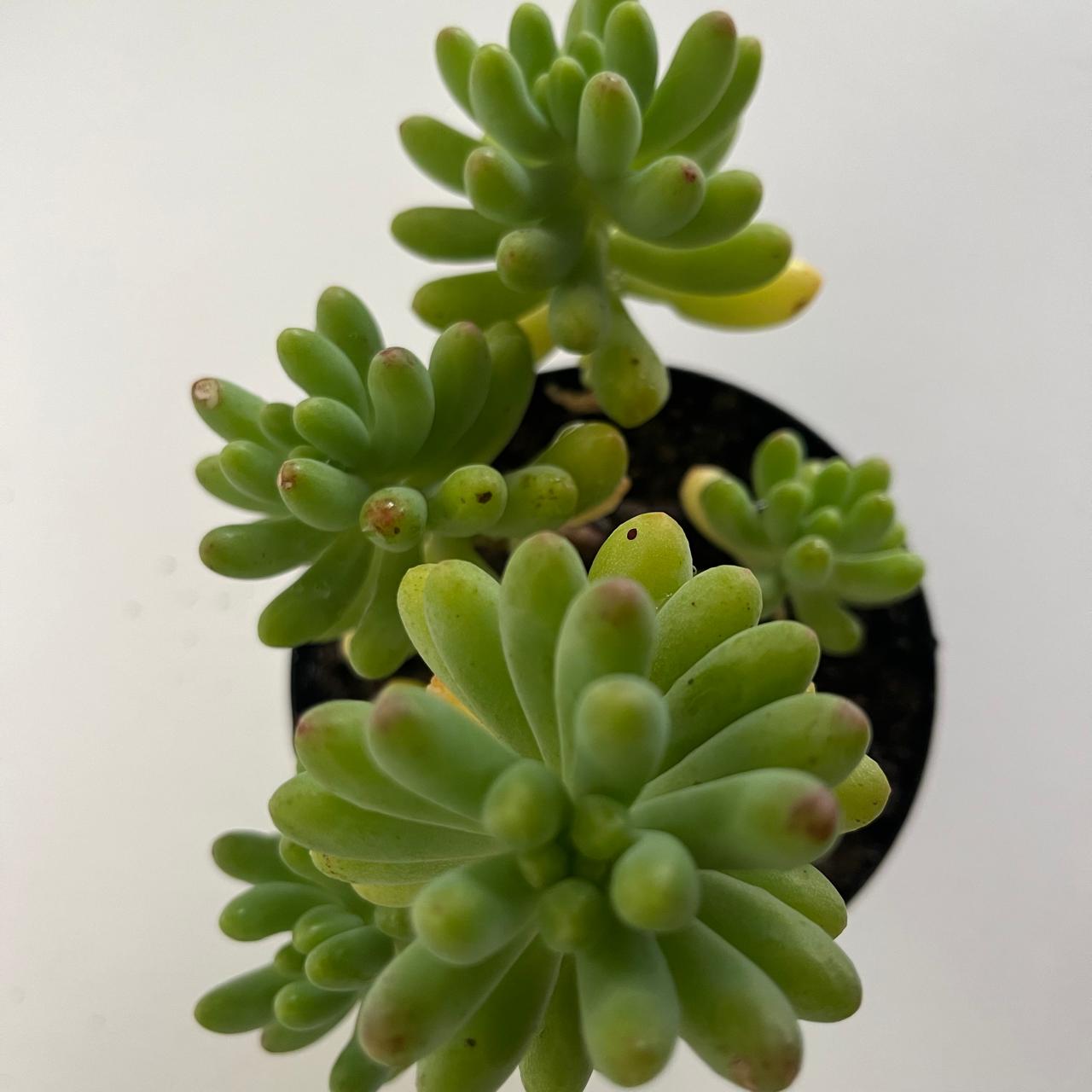
Sedum rubrotinctum, commonly known as the Jellybean Plant or Pork and Beans, is a charming succulent prized for its plump, bean-shaped leaves and effortless beauty. Native to Mexico, this evergreen succulent has become a favourite among gardeners and indoor plant enthusiasts for its vibrant colours, low-maintenance nature, and ability to thrive in a wide range of environments. During periods of bright sunlight or cooler temperatures, its green foliage develops attractive red tips, creating a striking display that resembles colourful jellybeans.
Whether grown in decorative pots, hanging baskets, rock gardens, or succulent arrangements, Sedum rubrotinctum adds texture, colour, and year-round interest to any space.
Appearance
Sedum rubrotinctum forms low-growing, spreading stems densely covered with fleshy, cylindrical leaves. The leaves are bright green during active growth but gradually turn shades of orange, crimson, and ruby red when exposed to full sun or mild environmental stress. This natural colour transformation gives the plant its distinctive ornamental appeal.
In spring, mature plants may produce clusters of small, star-shaped yellow flowers that contrast beautifully against the colourful foliage. Although the flowers are delicate, the foliage remains the plant’s primary attraction throughout the year.
Growing Conditions
Sedum rubrotinctum thrives in warm, sunny conditions and prefers well-drained, sandy or gritty soil. It performs exceptionally well in containers with excellent drainage and is equally suited to rockeries, succulent gardens, and xeriscape landscapes.
This succulent prefers:
- Full sun to partial shade
- Well-draining cactus or succulent potting mix
- Moderate warmth with protection from prolonged frost
- Good air circulation
- Infrequent watering
In regions with cold winters, the plant is best grown indoors or moved to a sheltered location before frost arrives.
Plant Care and Handling
One of the greatest advantages of Sedum rubrotinctum is its minimal care requirements. Water only when the soil has dried out completely, as excessive moisture can quickly lead to root rot. During winter, watering should be reduced significantly while the plant enters a slower growth phase.
Feed sparingly with a balanced succulent fertiliser during spring and summer to encourage healthy growth. Repot every few years when the plant becomes overcrowded or the soil loses its drainage quality.
The delicate leaves detach easily when handled, but these fallen leaves can often be used to propagate new plants.
Propagation
Sedum rubrotinctum is exceptionally easy to propagate, making it an excellent choice for beginners. New plants can be grown from individual leaves, stem cuttings, or offsets.
Allow cuttings to dry for a day or two before placing them in well-drained soil. Roots usually develop within a few weeks under warm conditions with indirect sunlight and minimal watering.
Benefits
Beyond its attractive appearance, Sedum rubrotinctum offers several practical benefits:
- Ideal for drought-tolerant and water-wise gardens.
- Requires very little maintenance once established.
- Excellent for container gardening and indoor displays.
- Suitable for rock gardens, succulent collections, and living walls.
- Helps create attractive ground cover in warm climates.
- Easy to propagate, making it economical to expand collections.
- Adds year-round colour and texture to landscapes.
- Well suited for beginners learning succulent care.
Uses
Sedum rubrotinctum is widely used as an ornamental plant in both indoor and outdoor settings. Its colourful foliage makes it a popular choice for succulent bowls, decorative containers, fairy gardens, rockeries, rooftop gardens, and drought-resistant landscapes.
The plant also complements mixed succulent arrangements, where its rounded leaves provide contrast against plants with spiky or rosette-shaped foliage. Its cascading stems make it particularly attractive in hanging baskets and elevated planters.
Interesting Facts
The common name “Jelly Bean Plant” comes from its distinctive bean-shaped leaves, which closely resemble colourful jelly sweets. Under bright sunlight, the vivid red colouring becomes even more intense, making each plant unique depending on its growing conditions.
Like many succulents, Sedum rubrotinctum stores water within its leaves, allowing it to survive extended dry periods. Individual leaves that fall from the plant often develop roots naturally, making propagation remarkably simple.
For sale in South Africa.
Shipping Countries: South Africa
Shipping States: Western Cape (South Africa)
Ready to ship in 1-3 business days
Shipping Policy
We will process your order within 1-3 business days.
Many of our plants can be couriered nationwide via the courier guy - and at checkout these options will be displayed. IF couriering doesn't come up as an option, this means that your basket contains one or more items that cannot be couriered - due to size/or practical reasons.
In this case, please either remove from your basket, or contact us for help.
For example, our horse compost cannot be sent via courier and will therefore appear as click and collect only!
We DO offer local deliveries! To those with postcode 7130. (or in the Raithby or Somerset West area.)
NB: We normally send the plants on a Monday or Tuesday to minimise the chance they'll get stuck in a depot over the weekend.
Refund Policy
No refunds on click & collect goods.
Normal refund policy (see terms and conditions) on other 'delivery' products.
| Weight | 0.52 kg |
|---|---|
| colour | Green |
| pot size cm |
Product Location
Winery Rd, Raithby, South Africa-
Pots, Toolshed
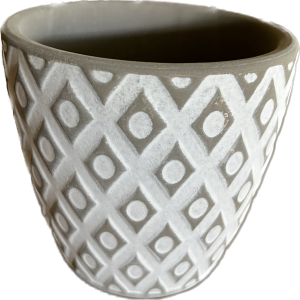
Plant pot – Modern Diamond and Dot 10.5cm
Raithby, WC
A beautiful plant pot, for your indoor or outdoor plants.
Ceramic, one of 7 designs from our ‘ice’ range, with a modern diamond and dot design
Pot has 3 soft touch felt pads underneath (so as not to scratch tables and surfaces)
Pot is 10.5cm in diameter and 9cm high
For sale in South Africa. Couriered nationwide.
SKU: n/a -
-

Related products
-
Plants, Succulents & Cacti
Haworthia Nigra
Oudtshoorn, WC
Haworthia nigra is a little succulent with a big attitude! With its dark, almost black, spiky leaves stacked in tight layers, it looks like it’s ready to join the goth plant club. Native to South Africa, this hardy little character doesn’t need much to thrive but always stands out with its unique look. Perfect for those who appreciate a plant that can rock the “all black everything” vibe!
Care Instructions:
Haworthia nigra prefers bright, indirect light but can tolerate some shade. Plant it in well-draining soil and water sparingly, letting the soil dry out completely between waterings. It grows slowly and enjoys a light monthly feeding of diluted succulent fertilizer during the warmer months. Just remember: too much water makes it sulky!SKU: n/a -
Plants, Succulents & Cacti
Kalanchoe beharensis ‘Fang’
Raithby, WC
Kalanchoe beharensis ‘Fang’
Noted for its eccentric appearance, award-winning Kalanchoe beharensis ‘Fang’ (Felt Plant) is a bushy, often tree-like perennial succulent, with velvety, triangular to lance-shaped, long-stalked leaves. Bronze or green on the upper surface, with silver-gray undersides, the large fleshy leaves, up to 4 in.
For sale in South Africa.
SKU: n/a -
Plants, Succulents & Cacti
Dracaena trifasciana (Snake plant)
Mossèlbay, WC
This Dracaena trifasciana (also known as a snake plant or mother in law’s tongue!) has web-like underground roots and thick, sword-shaped leaves with a unique banded pattern.
They grow more quickly in bright, indirect light. Flowering occurs mostly during spring and summer.
Beware though, their leaves contain a poison that can cause swelling and numbness on the tongue if eaten in large doses.
SKU: n/a


