


Heuchera ‘Green Tea’
Out of stock
Heuchera ‘Green Tea’ is a semi-evergreen perennial celebrated for its distinctive foliage and flowers. It is known for its compact size, low maintenance, and adaptability to a range of garden settings.
Also known as Kira Green Tea Coral Bells.
- Foliage: The standout feature of this plant is its bright, silvery-green, maple-like leaves, which emerge yellow in spring. The leaves have a crinkled texture and prominent dark green veins.
- Flowers: In late spring and summer, it produces tall, dainty spikes of bell-shaped, pale-pink flowers held above the foliage.
- Size: This is a compact, clump-forming variety. This clump-forming perennial forms basal mounds, up to 25 cm tall with a spread of 20-30 cm.
R95.00
Out of stock
Heuchera ‘Green Tea’ is a semi-evergreen perennial celebrated for its distinctive foliage and flowers. It is known for its compact size, low maintenance, and adaptability to a range of garden settings.
Also known as Kira Green Tea Coral Bells.
- Foliage: The standout feature of this plant is its bright, silvery-green, maple-like leaves, which emerge yellow in spring. The leaves have a crinkled texture and prominent dark green veins.
- Flowers: In late spring and summer, it produces tall, dainty spikes of bell-shaped, pale-pink flowers held above the foliage.
- Size: This is a compact, clump-forming variety. This clump-forming perennial forms basal mounds, up to 25 cm tall with a spread of 20-30 cm.
- Light: ‘Green Tea’ performs well in both partial shade and full sun, but it does best with morning sun and afternoon shade, especially in hotter climates. Pale-leaved heucheras like ‘Green Tea’ are more prone to scorching in direct afternoon sun than darker varieties.
- Soil: Plant in fertile, moist, and well-drained soil with a neutral to slightly acidic pH (6.0–7.0). Good drainage is critical, as soggy soil can cause the plant’s crown to rot, particularly in winter.
- Watering: Keep the soil consistently moist, but not waterlogged. The plant is drought-tolerant once established, but it is best to provide regular watering during hot, dry spells.
- Fertilizer: While not a heavy feeder, a slow-release, balanced fertilizer can be applied in early spring for best results.
- Landscape applications: ‘Green Tea’ is versatile and can be used in a variety of settings, including mass plantings, rock gardens, border edging, and containers.
- Pest and disease resistance: It is generally resistant to deer. However, watch for problems like vine weevils, slugs, snails, and leaf spots.
- Winter preparation: Because of their shallow roots, heucheras are susceptible to “frost heave,” where the plant is pushed out of the ground by freezing and thawing soil. Applying a thick layer of mulch around the base in the autumn can protect the plant.
- Maintenance:
- Deadheading: Removing spent flower stalks can encourage new growth.
- Division: The plant can be lifted and divided every few years in the autumn or spring to rejuvenate it and maintain vigorous growth.
- Pruning: Tidy up any old or dead leaves in the autumn.
Performs best in part shade or full shade in rich, humusy, medium moisture, well-drained soils. If grown in full sun, make sure the soil remains consistently moist or the foliage might decline.
It is attractive to butterflies and often ignored by buck.
A spectacular addition to beds, borders, woodland gardens or in containers. Fabulous when planted in groups
Divide clumps in spring every 3-4 years.
Remove stems of faded flowers to promote additional blooms.
For sale in South Africa. Couriered nationwide.
Shipping Countries: South Africa
Shipping States: Western Cape (South Africa)
Ready to ship in 1-3 business days
Shipping Policy
We will process your order within 1-3 business days.
Many of our plants can be couriered nationwide via the courier guy - and at checkout these options will be displayed. IF couriering doesn't come up as an option, this means that your basket contains one or more items that cannot be couriered - due to size/or practical reasons.
In this case, please either remove from your basket, or contact us for help.
For example, our horse compost cannot be sent via courier and will therefore appear as click and collect only!
We DO offer local deliveries! To those with postcode 7130. (or in the Raithby or Somerset West area.)
NB: We normally send the plants on a Monday or Tuesday to minimise the chance they'll get stuck in a depot over the weekend.
Refund Policy
No refunds on click & collect goods.
Normal refund policy (see terms and conditions) on other 'delivery' products.
| Weight | 0.65 kg |
|---|---|
| pot size cm | |
| colour | Cream, Green, Pink, White |
Product Location
Winery Rd, Raithby, South Africa-
Plants, Shrubs & Perennials
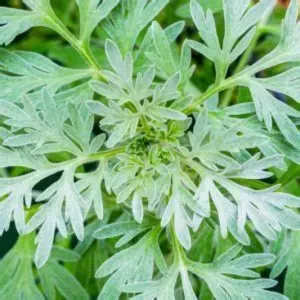
Artemisia (Powis Castle)
Raithby, WC
Artemisia “Powis Castle”
Whether used as a border plant, container feature or companion to colourful flowering plants, Artemisia ‘Powis Castle’ brings a soft touch of silver, texture and timeless elegance to any landscape.
For sale in South Africa.
SKU: n/a -
Pots, Toolshed
Plant pot – Modern Diamond and Dot 10.5cm
Raithby, WC
A beautiful plant pot, for your indoor or outdoor plants.
Ceramic, one of 7 designs from our ‘ice’ range, with a modern diamond and dot design
Pot has 3 soft touch felt pads underneath (so as not to scratch tables and surfaces)
Pot is 10.5cm in diameter and 9cm high
For sale in South Africa. Couriered nationwide.
SKU: n/a -
Compost, Toolshed
Ericaceous (Acid) compost
Raithby, WC
Ericaceous compost is acidic and is beneficial for plants that like an acid soil. For example camellias, rhododendrons, erica’s etc.
Hydrangeas also benefit, making their colours more intense and also making certain flowers more blue in colour. The pH of an acidic soil is typically between 4.5 and 6.SKU: n/a -
Pots, Toolshed
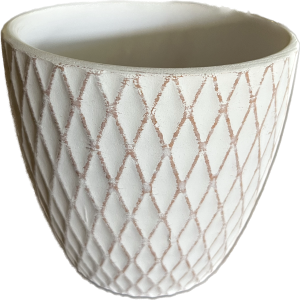
Plant pot – ice Diamonds 10.5cm
Raithby, WC
A beautiful plant pot, for your indoor or outdoor plants.
Ceramic, one of 7 designs from our ‘ice’ range, with a diamonds design
Pot has 3 soft touch felt pads underneath (so as not to scratch tables and surfaces)
Pot is 10.5cm in diameter and 9cm high
For sale in South Africa. Couriered nationwide.
SKU: n/a -


Related products
-
Compost, Fertilizer, Soil, Toolshed
Lawndressing
Somerset West, WC
Lawndressing mix. Perfect for a green, healthy lawn. This product is a 1 to 1 sand and compost mix – good for knitting together your new lawn and providing some nourishment, or rejuvenating or levelling an older, patchy or uneven lawn. Depot based in Somerset West.
SKU: n/a -
Plants, Shrubs & Perennials
Salvia Gesneriifolia (Tequila Sunrise)
Raithby, WC
Salvia Gesneriifolia (Tequila Sunrise)
Native to the mountainous areas of Mexico, these herbaceous perennial plants or large shrubs are a lovely addition to a garden.
Red flowers with dark maroon (almost black) calyces these plants reach 2-3m high unless pruned to size. These plants flower so regularly that it’s sometimes difficult to know when to prune them back into shape. Don’t prune hard to the ground otherwise you risk losing the plant. Easy to grow shrub that likes some partial or semi shaded position. It needs some regular watering during the hottest summer months.
SKU: n/a -
Plants, Shrubs & Perennials
White Bacopa megacopa (Sutera Cordata)
Raithby, WC
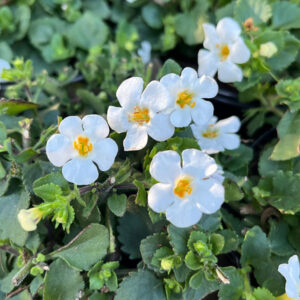
Perennial groundcover. Lovely white flowers.
Perfect for beds and pots, a heat-tolerant plant that loves well-drained soil.
low-maintenance and attracts pollinators.
For sale in South Africa. Couriered nationwide.
Genus of seven species of flowering plants in the nightshade family Solanaceae. They are woody trees or shrubs, with pendulous flowers.
For sale in South Africa. Couriered nationwide.
SKU: n/a