






Haworthia Viscosa x Scabra Hybrid
Out of stock
Haworthia viscosa × scabra is ’n fassinerende bastervetplant uit die Asphodelaceae-familie, wat die meetkundige styl van H. viscosa kombineer met die growwe, tekstuuragtige blare van H. scabra. Albei ouers is inheems aan Suid-Afrika en goed aangepas by droë, klipperige omgewings, wat aan hierdie baster ’n robuuste en visueel aantreklike aard gee. Die plant het skerpgerande, driehoekige blare wat in ’n vertikale of spiraalvormige patroon rangskik is, dikwels bedek met ’n growwe, ruwe oppervlak. Dit is ’n stadig-groeiende, kompakte plant wat ideaal is vir versamelaars of beperkte ruimtes. Die plant verkies helder, indirekte lig, goeie lugvloei, en ’n growwe, goed dreinerende grondmengsel. Water slegs wanneer die grond heeltemal droog is, aangesien oorwater maklik wortelvrot kan veroorsaak. Die plant is droogtebestand en moet teen ryp en oormatige vog beskerm word. Voortplanting geskied deur uitlopers of blaarstekke.
R55.00
Out of stock
Ready to ship in 3-5 business days
Shipping Policy
**Shipping Policy for Plants**
At MantisPlants, we take great care in preparing and shipping your plants to ensure they arrive in the best possible condition.
Bare Root Shipping
All plants are typically shipped bare-rooted, meaning that the soil is carefully removed from the roots to prevent any damage during transit. We wash the roots to remove any remaining soil and allow them to dry before wrapping them gently in tissue paper. This process helps minimize stress on the plant and ensures its safe arrival to you.
Pot Shipping Option (Not Recommended)
While we do offer the option of shipping some plants in their pots, this is generally not advisable. Shipping a plant in its pot can result in root damage due to movement and stress during transit. The roots can become constricted or disturbed, which can harm the plant. If you are still interested in this option, it must be arranged in advance with the vendor, and we will take extra precautions to pack it as securely as possible. However, we highly recommend the bare-root shipping method to ensure the best possible outcome for your plant.
**Careful Packaging**
We take pride in our packing process to ensure your plant arrives safely. Every plant is carefully packed, with extra attention to detail to protect the roots and foliage. We take care to secure the plant during transit, and make sure it is cushioned and stabilized inside the shipping box to avoid damage.
Our goal is to make sure your plant reaches you healthy and ready to thrive! If you have any questions about the shipping process, feel free to reach out to us.
| Weight | 0.3 kg |
|---|---|
| pot size | 7.5cm |
Based on 0 reviews
Only logged in customers who have purchased this product may leave a review.
Product Location
oudthoorn, South Africa-
Plants, Succulents & Cacti
Obregonia Denegrii
Oudtshoorn, WC
: Obregonia denegrii, also known as the Artichoke Cactus, is a rare, slow-growing cactus native to northeastern Mexico. It has a unique, spiral rosette resembling an artichoke. For optimal growth, plant it in well-draining cactus soil and place it in a spot with full sun to partial shade. Water sparingly, allowing the soil to dry completely between waterings, especially in winter. An interesting fact about Obregonia denegrii is that it is the only species in its genus, making it a distinct and prized specimen among cactus enthusiasts.
SKU: n/a -
Plants, Succulents & Cacti
Astrophytum Myriostigma Tricostatum
Oudtshoorn, WC
Astrophytum myriostigma var. tricostatum is a rare and visually striking variety of the Bishop’s Cap cactus, native to Mexico. Unlike the typical five-ribbed form, this variety usually has only three prominent ribs (hence “tricostatum”). It has a smooth, spineless surface covered with tiny white speckles that give it a starry appearance. The cactus produces yellow, daisy-like flowers at the top during spring or summer. Due to its unique shape and low-maintenance care needs, it is highly sought after by collectors and succulent enthusiasts.
SKU: n/a -
Plants, Succulents & Cacti
Gymnocalycium mihanovichii Hybrids
Oudtshoorn, WC
Gymnocalycium mihanovichii is a small, globular cactus species native to the semi-arid regions of Paraguay and parts of northern Argentina. It belongs to the Cactaceae family and is part of a genus known for its relatively easy care, compact size, and attractive flowers.
This species typically grows to about 5–6 cm in height and 4–5 cm in diameter. It has a flattened, spherical body with 8–14 broad ribs and a grayish-green to dark green color. The stem is often slightly wrinkled and marked by low tubercles. It bears short, slightly curved spines that vary in number but are generally not aggressive, making the plant user-friendly for handling.
Flowers appear from the crown of the plant during late spring to summer. They are funnel-shaped and range in color from pale pink to light purple, occasionally white. The blooms are relatively large compared to the size of the plant and open during the day.
This species prefers well-draining cactus soil, moderate watering (allowing the soil to dry completely between waterings), and bright, indirect sunlight. Direct sun in hot climates can cause sunburn on the plant’s surface. It tolerates mild cold but should be protected from frost.
In cultivation, Gymnocalycium mihanovichii is often the parent of colorful grafted hybrids like the “Moon Cactus” (var. friedrichii), which lacks chlorophyll and must be grafted onto a host plant to survive.
SKU: n/a


Related products
-
Plants, Succulents & Cacti
Gasteria Lilliputana
Oudtshoorn, WC
Gasteria lilliputana is a tiny, yet striking succulent native to South Africa. This miniature plant features thick, fleshy leaves that form a dense rosette, with dark green to greyish-green coloring and distinctive white markings or spots. The leaves are rough to the touch, giving it a unique texture that stands out in succulent collections. In late winter or early spring, it produces small, tubular flowers in shades of pink or red, adding a pop of color to its compact form. Interesting fact: Despite its small size, Gasteria lilliputana is extremely hardy and can tolerate drought and neglect, making it an ideal choice for beginner succulent growers. Its slow-growing nature also means it requires minimal maintenance and thrives in bright, indirect light.
SKU: n/a -
Plants, Succulents & Cacti
Kalanchoe Silver Spoons
Near Raithby, Stellenbosch, WC
Kalanchoe silver spoons
Add a touch of soft texture and silvery charm to your plant collection with Kalanchoe ‘Silver Spoons’. This eye-catching succulent is loved for its unique, spoon-shaped leaves covered in a fine, velvety coating that gives the plant its distinctive silver-grey appearance. Subtle bronze edging may develop in brighter light, adding even more character and warmth.
Compact and easy to grow, Silver Spoons is perfect for containers, sunny windowsills, and water-wise gardens. It thrives in well-draining soil and requires minimal watering, making it an excellent choice for busy plant lovers or those new to succulents.
SKU: n/a -
Plants, Succulents & Cacti
Mammillaria Decipiens, Birds Nest Cactus
Oudtshoorn, WC
Mammillaria decipiens (Bird’s Nest Cactus)
A charming and compact cactus, Mammillaria decipiens forms dense clusters of soft, cylindrical stems that naturally arrange into a beautiful “bird’s nest” shape. Its fine, radial spines give it a delicate, textured look, while in season it produces a ring of small, creamy-white to pale yellow flowers that crown each stem like a halo.
Perfect for small pots or collectors’ displays, this easy-care species thrives in bright light and requires minimal watering, making it ideal for both beginners and seasoned cactus enthusiasts.
Interesting fact:
The name “decipiens” means “deceptive” — a nod to how this cactus can easily be mistaken for other Mammillaria species, even by experienced collectors.SKU: n/a -
Plants, Succulents & Cacti
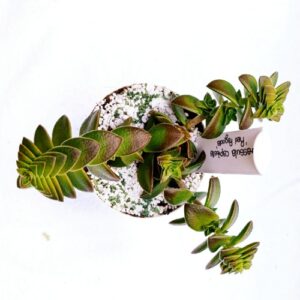
Crassula capitella ‘Red Pagoda’
Raithby, WC
The Crassula capitella ‘Red Pagoda’ is a stunning branching succulent that sports a stack of fleshy, triangular chartreuse leaves that are adorned with red tips. It requires full sun to partial shade and well draining soil. It is ideal for rock gardens or planters. It is drought resistant and easy to maintain.
SKU: n/a


There are no reviews yet.