-
×
 Variegated Aloe Hybrid
- Vendor:
MantisPlants
Subtotal: R80.00


3 in stock
Gymnocalycium baldianum, the spider-cactus or dwarf chin cactus, is a species of flowering plant in the cactus family Cactaceae, native to the Catamarca Province in Argentina
R25.00 R50.00
3 in stock
Gymnocalycium baldianum, the spider-cactus or dwarf chin cactus, is a species of flowering plant in the cactus family Cactaceae, native to the Catamarca Province in Argentina
Shipping States: North West (South Africa), Eastern Cape (South Africa), Northern Cape (South Africa), Mpumalanga (South Africa), Limpopo (South Africa), KwaZulu-Natal (South Africa), Gauteng (South Africa), Western Cape (South Africa), Free State (South Africa)
Ready to ship in 3-5 business days
Shipping Policy
**Shipping Policy for Plants**
At MantisPlants, we take great care in preparing and shipping your plants to ensure they arrive in the best possible condition.
Bare Root Shipping
All plants are typically shipped bare-rooted, meaning that the soil is carefully removed from the roots to prevent any damage during transit. We wash the roots to remove any remaining soil and allow them to dry before wrapping them gently in tissue paper. This process helps minimize stress on the plant and ensures its safe arrival to you.
Pot Shipping Option (Not Recommended)
While we do offer the option of shipping some plants in their pots, this is generally not advisable. Shipping a plant in its pot can result in root damage due to movement and stress during transit. The roots can become constricted or disturbed, which can harm the plant. If you are still interested in this option, it must be arranged in advance with the vendor, and we will take extra precautions to pack it as securely as possible. However, we highly recommend the bare-root shipping method to ensure the best possible outcome for your plant.
**Careful Packaging**
We take pride in our packing process to ensure your plant arrives safely. Every plant is carefully packed, with extra attention to detail to protect the roots and foliage. We take care to secure the plant during transit, and make sure it is cushioned and stabilized inside the shipping box to avoid damage.
Our goal is to make sure your plant reaches you healthy and ready to thrive! If you have any questions about the shipping process, feel free to reach out to us.
| Weight | 0.3 kg |
|---|---|
| pot size cm |
Tulista pumila (formerly Haworthia pumila) is a striking and slow-growing succulent native to the Western Cape of South Africa. Known for its architectural beauty, this plant forms compact rosettes of thick, fleshy, dark green to brownish leaves covered with prominent raised white tubercles, giving it a textured, bumpy appearance.
Tulista pumila can grow up to 20 cm (8 inches) tall and wide, with mature plants producing tall, slender flower stalks bearing small, tubular, pale pink to white flowers—typically blooming in late spring to summer. The leaves are triangular and curved inward, often with toothed margins, adding to its ornamental value.
This species is drought-tolerant and prefers well-draining soil, partial sun to bright indirect light, and minimal watering—making it ideal for rock gardens, succulent collections, or container displays. Tulista pumila is also prized for its resilience and unique form, often regarded as one of the most attractive members of the Tulista genus.
Mammillaria theresae is a rare and highly sought-after miniature cactus native to the rocky slopes of Durango, Mexico. It is known for its compact size, dense white spines, and stunning pink to magenta flowers that bloom in spring. This slow-growing species thrives in well-draining soil, bright indirect sunlight, and minimal watering. To prevent root rot, allow the soil to dry completely between waterings. Mammillaria theresae prefers warm temperatures and should be protected from frost.
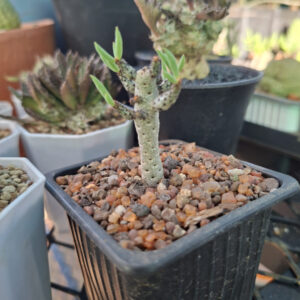
Tylecodon buchholzianus is a winter-growing succulent shrub native to the arid regions of South Africa, particularly the Western and Northern Cape. Like other members of the genus Tylecodon, it is well adapted to long, dry summers and produces leaves only during the cooler growing season.
Characteristics:
Cultivation:
Notes:
Gymnocalycium mihanovichii is a small, globular cactus species native to the semi-arid regions of Paraguay and parts of northern Argentina. It belongs to the Cactaceae family and is part of a genus known for its relatively easy care, compact size, and attractive flowers.
This species typically grows to about 5–6 cm in height and 4–5 cm in diameter. It has a flattened, spherical body with 8–14 broad ribs and a grayish-green to dark green color. The stem is often slightly wrinkled and marked by low tubercles. It bears short, slightly curved spines that vary in number but are generally not aggressive, making the plant user-friendly for handling.
Flowers appear from the crown of the plant during late spring to summer. They are funnel-shaped and range in color from pale pink to light purple, occasionally white. The blooms are relatively large compared to the size of the plant and open during the day.
This species prefers well-draining cactus soil, moderate watering (allowing the soil to dry completely between waterings), and bright, indirect sunlight. Direct sun in hot climates can cause sunburn on the plant’s surface. It tolerates mild cold but should be protected from frost.
In cultivation, Gymnocalycium mihanovichii is often the parent of colorful grafted hybrids like the “Moon Cactus” (var. friedrichii), which lacks chlorophyll and must be grafted onto a host plant to survive.
Astrophytum Myriostigma var. quadricostatum, also known as the “Bishop’s Cap Cactus,” is a distinctive, spineless cactus with four prominent ribs, giving it a star-shaped appearance. Native to Mexico, this cactus is covered with tiny white dots that help it retain water in dry climates. It’s a great choice for collectors due to its unique look and easy care.
Care Instructions: