






Gasteria Batesiana
2 in stock
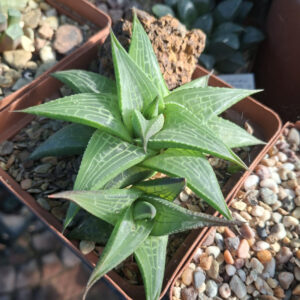
Gasteria batesiana is a small, hardy succulent native to South Africa. It has dark green, triangular leaves with rough, textured surfaces, often adorned with white spots or streaks. The plant grows in a rosette form and can tolerate low light, making it ideal for indoor cultivation. It produces tubular, pinkish-red flowers on tall stalks, typically during the spring or summer. Known for its drought tolerance and easy care, Gasteria batesiana is popular among succulent collectors.
R80.00
2 in stock
Gasteria batesiana is a small, hardy succulent native to South Africa. It has dark green, triangular leaves with rough, textured surfaces, often adorned with white spots or streaks. The plant grows in a rosette form and can tolerate low light, making it ideal for indoor cultivation. It produces tubular, pinkish-red flowers on tall stalks, typically during the spring or summer. Known for its drought tolerance and easy care, Gasteria batesiana is popular among succulent collectors.
Ready to ship in 3-5 business days
Shipping Policy
**Shipping Policy for Plants**
At MantisPlants, we take great care in preparing and shipping your plants to ensure they arrive in the best possible condition.
Bare Root Shipping
All plants are typically shipped bare-rooted, meaning that the soil is carefully removed from the roots to prevent any damage during transit. We wash the roots to remove any remaining soil and allow them to dry before wrapping them gently in tissue paper. This process helps minimize stress on the plant and ensures its safe arrival to you.
Pot Shipping Option (Not Recommended)
While we do offer the option of shipping some plants in their pots, this is generally not advisable. Shipping a plant in its pot can result in root damage due to movement and stress during transit. The roots can become constricted or disturbed, which can harm the plant. If you are still interested in this option, it must be arranged in advance with the vendor, and we will take extra precautions to pack it as securely as possible. However, we highly recommend the bare-root shipping method to ensure the best possible outcome for your plant.
**Careful Packaging**
We take pride in our packing process to ensure your plant arrives safely. Every plant is carefully packed, with extra attention to detail to protect the roots and foliage. We take care to secure the plant during transit, and make sure it is cushioned and stabilized inside the shipping box to avoid damage.
Our goal is to make sure your plant reaches you healthy and ready to thrive! If you have any questions about the shipping process, feel free to reach out to us.
| Weight | 0.3 kg |
|---|---|
| pot size | 7.5cm |
Product Location
oudthoorn, South Africa-
Plants, Succulents & Cacti
Ortegocactus macdougallii
Oudtshoorn, WC
Ortegocactus macdougallii is a rare and unique species of cactus native to a small region in Oaxaca, Mexico. It is a small, globular cactus that usually grows as a solitary plant but can form small clusters over time. The body is dark green to gray-green with distinctive black spines and a slightly woolly crown. One of its most striking features is the chalky, bluish-grey coating on the skin, which helps protect it from intense sunlight. It produces bright yellow flowers in spring or early summer. Due to its limited natural habitat, it is considered a vulnerable species and is prized by cactus collectors.
SKU: n/a -
Plants, Succulents & Cacti
Astrophytum Myriostigma Tricostatum
Oudtshoorn, WC
Astrophytum Myriostigma var. quadricostatum, also known as the “Bishop’s Cap Cactus,” is a distinctive, spineless cactus with four prominent ribs, giving it a star-shaped appearance. Native to Mexico, this cactus is covered with tiny white dots that help it retain water in dry climates. It’s a great choice for collectors due to its unique look and easy care.
Care Instructions:
- Light: Prefers bright, indirect sunlight; a few hours of direct morning sun is beneficial.
- Water: Water sparingly, especially during winter. Allow the soil to dry completely between waterings to prevent rot.
- Soil: Use a well-draining cactus soil mix, ideally with added grit or sand.
- Temperature: Thrives in warm conditions (20-30°C) but can tolerate cooler temperatures down to around 5°C if kept dry.
- Humidity: Low humidity is best.
- Fertilizer: Apply a diluted cactus fertilizer during the growing season (spring and summer).
SKU: n/a -
Plants, Succulents & Cacti
Haworthia Viscosa Calitzdorp
Oudtshoorn, WC
Haworthia viscosa ‘Calitzdorp’ is a striking succulent known for its compact, triangular leaves arranged in elegant vertical stacks. Native to South Africa, this rare variety features thick, dark green leaves with a smooth, glossy surface, giving it a sculptural, geometric form. Its architectural beauty makes it a standout in any collection, and its slow-growing nature only enhances its appeal. Perfect for collectors of rare succulents, Haworthia viscosa ‘Calitzdorp’ is a symbol of understated elegance and natural resilience.
SKU: n/a -
Plants, Succulents & Cacti
Haworthia Tessellata
Oudtshoorn, WC
Origin: Haworthia Tessellata is native to the arid regions of South Africa and Namibia, where it grows in rocky soils and partial shade.
Care:
- Light: Bright indirect light or partial shade
- Water: Water thoroughly, then allow soil to dry out completely
- Soil: Well-draining cactus or succulent mix
- Temperature: Protect from frost and extreme cold
- Growth: Compact and slow-growing, ideal for small pots and indoor displays
SKU: n/a -
Plants, Succulents & Cacti
Ornithogalum Species
Oudtshoorn, WC
Ornithogalum is a genus of bulbous flowering plants in the asparagus family (Asparagaceae), native mainly to southern Africa and parts of Europe and western Asia. The group includes many species commonly called “star-of-Bethlehem” due to their star-shaped flowers.
General characteristics:
- Grows from underground bulbs (geophytes).
- Produces narrow, strap-like green leaves.
- Flowers are typically star-shaped with 6 white (sometimes green-striped) petals.
- Many species open in sunlight and close in low light or at night.
- Flowering season varies by species, but many South African types bloom in spring.
Habitat:
- Found in grasslands, renosterveld, fynbos edges, and rocky or sandy soils.
- Many species are adapted to seasonal rainfall patterns (winter or summer rainfall depending on region).
Cultivation:
- Prefers well-drained soil and full sun.
- Requires a dry dormancy period after flowering when leaves die back.
- Water lightly during active growth; avoid overwatering during dormancy.
- Bulbs can multiply over time, forming clumps.
Notes:
- Some species are highly ornamental, while others are considered invasive outside their native range.
- A few species may be toxic to livestock if ingested.
SKU: n/a -
Plants, Succulents & Cacti
Gymnocalycium mihanovichii Hybrids
Oudtshoorn, WC
Gymnocalycium mihanovichii is a small, globular cactus species native to the semi-arid regions of Paraguay and parts of northern Argentina. It belongs to the Cactaceae family and is part of a genus known for its relatively easy care, compact size, and attractive flowers.
This species typically grows to about 5–6 cm in height and 4–5 cm in diameter. It has a flattened, spherical body with 8–14 broad ribs and a grayish-green to dark green color. The stem is often slightly wrinkled and marked by low tubercles. It bears short, slightly curved spines that vary in number but are generally not aggressive, making the plant user-friendly for handling.
Flowers appear from the crown of the plant during late spring to summer. They are funnel-shaped and range in color from pale pink to light purple, occasionally white. The blooms are relatively large compared to the size of the plant and open during the day.
This species prefers well-draining cactus soil, moderate watering (allowing the soil to dry completely between waterings), and bright, indirect sunlight. Direct sun in hot climates can cause sunburn on the plant’s surface. It tolerates mild cold but should be protected from frost.
In cultivation, Gymnocalycium mihanovichii is often the parent of colorful grafted hybrids like the “Moon Cactus” (var. friedrichii), which lacks chlorophyll and must be grafted onto a host plant to survive.
SKU: n/a




Related products
-
Plants, Succulents & Cacti
Copiapoa Hypogaea cv. Lizard Skin
Oudtshoorn, WC
The Copiapoa hypogaea cv. Lizard Skin is a rare and unique cultivar native to the arid regions of northern Chile. Its textured, reptilian-like surface sets it apart as a true collector’s gem. Compact and slow-growing, this succulent thrives in well-drained soil and bright sunlight, making it a must-have for cacti enthusiasts. With its limited availability and striking appearance, the “Lizard Skin” cultivar adds both intrigue and exclusivity to any collection. Don’t miss the opportunity to own this fascinating specimen!
SKU: n/a -
Plants, Succulents & Cacti
Haworthia Viscosa Calitzdorp
Oudtshoorn, WC
Haworthia viscosa ‘Calitzdorp’ is a striking succulent known for its compact, triangular leaves arranged in elegant vertical stacks. Native to South Africa, this rare variety features thick, dark green leaves with a smooth, glossy surface, giving it a sculptural, geometric form. Its architectural beauty makes it a standout in any collection, and its slow-growing nature only enhances its appeal. Perfect for collectors of rare succulents, Haworthia viscosa ‘Calitzdorp’ is a symbol of understated elegance and natural resilience.
SKU: n/a -
Plants, Succulents & Cacti
Haworthia Nigra
Oudtshoorn, WC
Haworthia nigra is a little succulent with a big attitude! With its dark, almost black, spiky leaves stacked in tight layers, it looks like it’s ready to join the goth plant club. Native to South Africa, this hardy little character doesn’t need much to thrive but always stands out with its unique look. Perfect for those who appreciate a plant that can rock the “all black everything” vibe!
Care Instructions:
Haworthia nigra prefers bright, indirect light but can tolerate some shade. Plant it in well-draining soil and water sparingly, letting the soil dry out completely between waterings. It grows slowly and enjoys a light monthly feeding of diluted succulent fertilizer during the warmer months. Just remember: too much water makes it sulky!SKU: n/a


