






Coryphantha elephantidens inermis Seed Grown
2 in stock
Coryphantha elephantidens inermis is a unique, spineless cactus variety with distinct, fleshy tubercles on its surface. It forms a compact, globular shape and produces beautiful, creamy white to pale yellow flowers. This low-maintenance cactus is perfect for dry, sunny environments and is an ideal addition to rock gardens or cactus collections.
R180.00
2 in stock
Coryphantha elephantidens inermis is ‘n unieke, doringvrye kaktusvariëteit met kenmerkende, vleisagtige tuberkels op sy oppervlak. Dit vorm ‘n kompakte, bolvormige struktuur en produseer pragtige, roomwit tot liggeel blomme. Hierdie lae-onderhoud kaktus is ideaal vir droë, sonnige omgewings en is ‘n perfekte toevoeging tot rotstuine of kaktusversamelings.
Ready to ship in 3-5 business days
Shipping Policy
**Shipping Policy for Plants**
At MantisPlants, we take great care in preparing and shipping your plants to ensure they arrive in the best possible condition.
Bare Root Shipping
All plants are typically shipped bare-rooted, meaning that the soil is carefully removed from the roots to prevent any damage during transit. We wash the roots to remove any remaining soil and allow them to dry before wrapping them gently in tissue paper. This process helps minimize stress on the plant and ensures its safe arrival to you.
Pot Shipping Option (Not Recommended)
While we do offer the option of shipping some plants in their pots, this is generally not advisable. Shipping a plant in its pot can result in root damage due to movement and stress during transit. The roots can become constricted or disturbed, which can harm the plant. If you are still interested in this option, it must be arranged in advance with the vendor, and we will take extra precautions to pack it as securely as possible. However, we highly recommend the bare-root shipping method to ensure the best possible outcome for your plant.
**Careful Packaging**
We take pride in our packing process to ensure your plant arrives safely. Every plant is carefully packed, with extra attention to detail to protect the roots and foliage. We take care to secure the plant during transit, and make sure it is cushioned and stabilized inside the shipping box to avoid damage.
Our goal is to make sure your plant reaches you healthy and ready to thrive! If you have any questions about the shipping process, feel free to reach out to us.
| Weight | 0.3 kg |
|---|---|
| pot size | 7.5cm |
Based on 0 reviews
Only logged in customers who have purchased this product may leave a review.
Product Location
oudthoorn, South Africa-
Plants, Succulents & Cacti
Avonia Quinaria
Oudtshoorn, WC
Avonia quinaria is a tiny, mat-forming succulent native to arid regions of South Africa and Namibia. It was formerly placed in the genus Anacampseros and is closely related to other miniature “sand-dwelling” succulents.
Characteristics:
- Forms low, creeping mats of very small stems.
- Leaves are tiny and densely covered in white, papery scales, giving a silvery, almost cotton-like appearance.
- The plant often blends into sandy or rocky soils for camouflage.
- Produces small pink to white flowers that open briefly, usually in the afternoon under good light.
- Extremely small and slow-growing, often forming tight colonies over time.
Cultivation:
- Summer-growing succulent.
- Requires very well-drained, sandy or gritty soil.
- Water lightly during active growth (spring–summer).
- Keep mostly dry in winter dormancy.
- Prefers bright light; tolerates strong sun if acclimated.
- Sensitive to overwatering due to shallow roots.
Habitat:
- Found in arid, sandy or rocky areas of southern Namibia and South Africa.
SKU: n/a -
Plants, Succulents & Cacti
Euphorbia Pulvinata (Meloformis Variegated)
Oudtshoorn, WC
Euphorbia pulvinata is a small, cushion-forming succulent native to South Africa. It grows in dense, rounded clumps that resemble little green pillows, hence the name “pulvinata,” which means “cushion-like.” This plant has short, thick stems covered in small tubercles and spines, giving it a textured appearance. In spring to early summer, it produces tiny, yellow-green flowers (cyathia) at the tips of its stems. Like most euphorbias, it contains a milky sap that can be irritating to the skin and toxic if ingested. It thrives in full sun with well-draining soil and is ideal for rock gardens, containers, or succulent collections.
SKU: 1-1-2-1-2-2-1-1 -
Plants, Succulents & Cacti
Tephrocactus Articulatus var Papyracanthus, Paper Spine Cactus
Oudtshoorn, WC
Tephrocactus articulatus var. papyracanthus, commonly known as the Paper Spine Cactus, is one of the most unusual and decorative cacti in the world. This fascinating species forms segmented stems covered in flat, papery white spines that resemble delicate strips of parchment. Its unique appearance gives it a soft and artistic look despite being a true desert cactus. Over time, it develops into an attractive clumping specimen and may produce beautiful white to pale yellow flowers under the right conditions. It thrives in bright light, dry conditions, and very well-draining soil.
Interesting Fact:
The papery spines are actually modified protective spines that help reflect sunlight and shield the plant from extreme desert heat while also helping it blend into its rocky surroundings.Original Habitat:
Native to the arid regions of Argentina, where it grows in dry rocky deserts with intense sun and minimal rainfall.SKU: n/a -
Plants, Succulents & Cacti
Ornithogalum Species
Oudtshoorn, WC
Ornithogalum is a genus of bulbous flowering plants in the asparagus family (Asparagaceae), native mainly to southern Africa and parts of Europe and western Asia. The group includes many species commonly called “star-of-Bethlehem” due to their star-shaped flowers.
General characteristics:
- Grows from underground bulbs (geophytes).
- Produces narrow, strap-like green leaves.
- Flowers are typically star-shaped with 6 white (sometimes green-striped) petals.
- Many species open in sunlight and close in low light or at night.
- Flowering season varies by species, but many South African types bloom in spring.
Habitat:
- Found in grasslands, renosterveld, fynbos edges, and rocky or sandy soils.
- Many species are adapted to seasonal rainfall patterns (winter or summer rainfall depending on region).
Cultivation:
- Prefers well-drained soil and full sun.
- Requires a dry dormancy period after flowering when leaves die back.
- Water lightly during active growth; avoid overwatering during dormancy.
- Bulbs can multiply over time, forming clumps.
Notes:
- Some species are highly ornamental, while others are considered invasive outside their native range.
- A few species may be toxic to livestock if ingested.
SKU: n/a



Related products
-
Plants, Succulents & Cacti
Stenocactus multicostatus
Oudtshoorn, WC
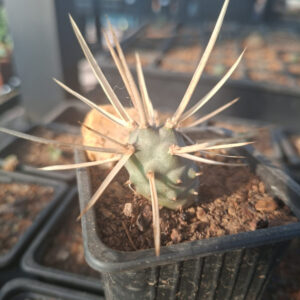
Stenocactus multicostatus is a distinctive cactus known for its many thin, wavy ribs that create a beautifully textured, spherical form. Its intricate structure gives it a sculptural appearance, while delicate flowers in shades of white to pale pink often bloom from the crown. This compact cactus thrives in bright light and well-drained soil, making it an excellent choice for containers and specialist cactus collections.
SKU: n/a -
Plants, Succulents & Cacti
Mammillaria Decipiens, Birds Nest Cactus
Oudtshoorn, WC
Mammillaria decipiens (Bird’s Nest Cactus)
A charming and compact cactus, Mammillaria decipiens forms dense clusters of soft, cylindrical stems that naturally arrange into a beautiful “bird’s nest” shape. Its fine, radial spines give it a delicate, textured look, while in season it produces a ring of small, creamy-white to pale yellow flowers that crown each stem like a halo.
Perfect for small pots or collectors’ displays, this easy-care species thrives in bright light and requires minimal watering, making it ideal for both beginners and seasoned cactus enthusiasts.
Interesting fact:
The name “decipiens” means “deceptive” — a nod to how this cactus can easily be mistaken for other Mammillaria species, even by experienced collectors.SKU: n/a -
Plants, Succulents & Cacti
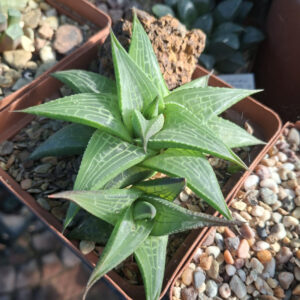
Haworthia Tessellata
Oudtshoorn, WC
Origin: Haworthia Tessellata is native to the arid regions of South Africa and Namibia, where it grows in rocky soils and partial shade.
Care:
- Light: Bright indirect light or partial shade
- Water: Water thoroughly, then allow soil to dry out completely
- Soil: Well-draining cactus or succulent mix
- Temperature: Protect from frost and extreme cold
- Growth: Compact and slow-growing, ideal for small pots and indoor displays
SKU: n/a



There are no reviews yet.