
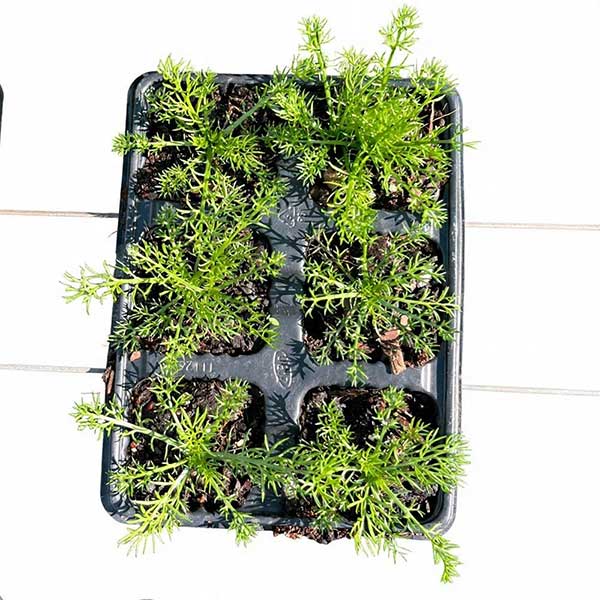
Camomile (Matricaria Chamomilla) 6pack
2 in stock
Camomile (Matricaria Chamomilla)
With its graceful flowers, delightful fragrance, and wide range of practical and ornamental uses, Chamomile is a rewarding addition to any garden. Whether grown for its beauty, pollinator-friendly nature, or fragrant blooms, this timeless herb offers lasting appeal and effortless charm throughout the flowering season.
For sale in South Africa.
R60.00
2 in stock
Camomile or Chamomile (Matricaria Chamomilla)
Chamomile (Matricaria chamomilla), also known as German Chamomile, is a delightful flowering herb celebrated for its daisy-like blooms, sweet apple-like fragrance, and remarkable versatility. Long treasured in gardens and traditional herbal practices, Chamomile is valued not only for its ornamental beauty but also for its soothing qualities. Its delicate white petals surrounding bright yellow centres create a cheerful display from late spring through summer, making it an attractive addition to herb gardens, cottage gardens, borders, and containers.
Native to Europe and Western Asia, Chamomile is now cultivated around the world for its flowers, which are commonly harvested and dried for herbal teas, potpourri, and natural skincare products. Its ease of cultivation and ability to attract beneficial insects make it a favourite among both home gardeners and commercial growers.
Appearance
Chamomile is a fast-growing annual herb with finely divided, feathery green foliage that gives the plant a soft, airy appearance. Slender stems support masses of small, daisy-like flowers measuring approximately 2–3 cm across. Each bloom consists of crisp white petals surrounding a vibrant golden-yellow centre, releasing a pleasant, fruity fragrance when gently brushed or harvested.
The profusion of flowers creates a light and elegant display that complements a wide variety of flowering plants.
Growing Conditions
Chamomile thrives in full sun and prefers well-drained, moderately fertile soil. It tolerates a range of soil types provided drainage is good and is relatively drought tolerant once established. Regular watering during prolonged dry periods encourages continuous flowering, while avoiding waterlogged soil helps maintain healthy roots.
This easy-care herb readily self-seeds under favourable conditions, providing fresh plants for future growing seasons.
Garden Uses
Chamomile is an excellent choice for herb gardens, cottage gardens, wildlife gardens, and mixed flower borders. Its compact growth habit also makes it suitable for containers, window boxes, and raised beds. The fragrant flowers attract bees, butterflies, hoverflies, and other beneficial pollinators, contributing to a healthy and biodiverse garden.
Fresh or dried flowers are widely used for herbal infusions, floral crafts, sachets, and potpourri, while the attractive blooms also make charming additions to fresh flower arrangements.
Benefits of Chamomile
- Produces masses of charming daisy-like flowers.
- Emits a pleasant, sweet apple-like fragrance.
- Attracts bees, butterflies, and other beneficial pollinators.
- Ideal for herb gardens, cottage gardens, and containers.
- Flowers can be harvested for herbal teas and potpourri.
- Easy to grow and suitable for beginner gardeners.
- Readily self-seeds for continuous seasonal displays.
Care Tips
Sow Chamomile in a sunny position after the last frost or during the appropriate planting season for your region. Keep the soil lightly moist during germination, then water moderately once established. Regular harvesting of the flowers encourages additional blooming throughout the growing season.
Deadheading spent flowers helps prolong flowering, while allowing a few blooms to mature will encourage natural self-seeding for future displays. An occasional application of compost is generally sufficient to support healthy growth, as Chamomile performs best without excessive fertilisation.
Shipping Countries: South Africa
Shipping States: Western Cape (South Africa), Limpopo (South Africa), Free State (South Africa), Northern Cape (South Africa), Mpumalanga (South Africa), Gauteng (South Africa), Eastern Cape (South Africa), North West (South Africa), KwaZulu-Natal (South Africa)
Ready to ship in 1-3 business days
Shipping Policy
This plant/s are sold by horti.co.za direct. We will process your order within 1-3 business days.
Many of our plants can be couriered nationwide - and at checkout these options will be displayed. IF couriering doesn't come up as an option, this means that your basket contains one or more items that cannot be couriered - due to size/or practical reasons.
In this case, please either remove from your basket, or contact us for help.
For example, our horse compost cannot be sent via courier and will therefore appear as click and collect only!
NB: We normally send the plants on a Monday or Tuesday to minimise the chance they'll get stuck in a depot over the weekend.
We offer click and collect for local customers only. :-)
Refund Policy
No refunds on click & collect goods.
Normal refund policy (see terms and conditions) on other 'delivery' products.
| Weight | 0.6 kg |
|---|---|
| pot size cm | |
| colour | White |
Product Location
Winery Rd, Raithby, South Africa-
Plants, Succulents & Cacti
Sedum Rubrotincum Succulent (Pork and Beans)
Raithby, WC
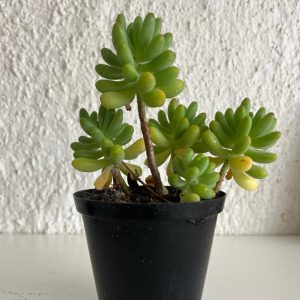
Sedum Rubrotincum Succulent (Pork and Beans)
Sedum rubrotinctum is a delightful succulent that combines beauty, resilience, and simplicity in one compact plant. Its colourful foliage, easy-care requirements, and remarkable adaptability have made it one of the most popular ornamental succulents worldwide. Whether displayed indoors on a sunny windowsill or incorporated into an outdoor drought-tolerant garden, the Jelly Bean Plant provides year-round interest with very little maintenance, making it an excellent addition to any plant collection.
SKU: n/a -
Plants, Shrubs & Perennials
Veronica Skyler White (Veronica Longifolia)
Raithby, WC
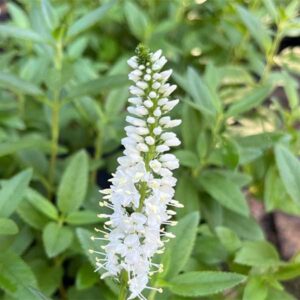
Veronica Skyler White (Veronica Longifolia)
Veronica Skyler White is a compact flowering perennial with upright spikes of small white flowers that bloom for a long period. It is commonly grown in gardens and is highly sought after by local cut-flower growers and home gardeners for its tall, elegant spikes.
It has a neat shape, strong stems, and repeat blooming. The plant prefers sunny spots and well-drained soil.
For sale in South Africa.
SKU: n/a -
Hydrangeas, Plants, Shrubs & Perennials
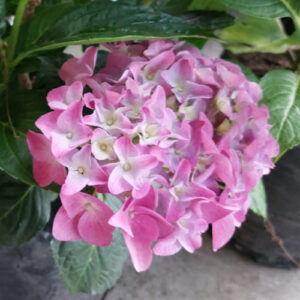
Hydrangea pink
Raithby, WC
These beautiful perennial plants bearing masses of large flowers, are also known as Christmas Roses in South Africa.
They need shade or partial shade and enough water to flourish. The acidity of the soil affects the colour of their flowers; acid compost will make the flowers more blue or purple, depending on the variety.Flowers are also excellent for cutting and stay fresh in the vase for a long time. Flowers can also be dried.
SKU: n/a -
Plants, Shrubs & Perennials
Fuchsia Thymifolia
Raithby, WC
Fuchsia thymifolia – Mexican Fuchsia
Delicate, graceful and full of charm, Fuchsia thymifolia is a compact evergreen shrub with tiny leaves and dainty, pendulous flowers in shades of pink to reddish-purple. Its fine foliage and elegant growth habit give it a soft, almost miniature appearance, making it a lovely choice for shaded gardens, woodland borders and patio containers. A wonderful plant for gardeners who appreciate unusual, understated beauty.
🌸 Flowering time: Spring to autumn, often longer in mild conditions
☀️ Position: Partial shade; protect from harsh afternoon sun
💧 Water: Moderate; keep the soil evenly moist but well drained
📏 Mature size: Approximately 60–100 cm high and wide
❄️ Frost tolerance: Light frost only; protect from severe frost
🌱 Soil pH: Slightly acidic to neutral, approximately pH 5.5–7Garden tip: Keep the roots cool with a layer of mulch and water regularly during hot, dry weather. Fuchsia thymifolia appreciates shelter from drying winds and is ideal for adding delicate colour to a shady corner.
SKU: n/a

Related products
-
Plants, Shrubs & Perennials, Trees
Double white Brugmansia
Raithby, WC
Beautiful and rare double form of white brugmansia – also known as angels trumpet or moonflowers.
Flowers throughout the year except in winter.
Prefers a sheltered spot from the wind which will otherwise cause the large buds to fall.
Medium water requirements. Fairly quick growing once established. Can reach 3m high, 2m spread. Prune to shape/to your required size.
These double flowers are not as scented as the single flowers, however are more than doubly beautiful!
Genus of seven species of flowering plants in the nightshade family Solanaceae. They are woody trees or shrubs, with pendulous flowers.
For sale in South Africa. Couriered nationwide.
SKU: n/a -
Plants, Shrubs & Perennials
Pleroma Urvilleana (Tibouchina)
Raithby, WC
This beautiful purple flowering evergreen plant grows into a graceful sprawling bush approximately 3-6m tall and 2-3m wide.
It has attractive dark green hairy leaves and clusters of dark purple flowers in Spring and Autumn. It likes gentle pruning once a year to keep it in shape. Partial shade and a sheltered position and medium water.
SKU: n/a -
Compost, Fertilizer, Soil, Toolshed
Lawndressing
Somerset West, WC
Lawndressing mix. Perfect for a green, healthy lawn. This product is a 1 to 1 sand and compost mix – good for knitting together your new lawn and providing some nourishment, or rejuvenating or levelling an older, patchy or uneven lawn. Depot based in Somerset West.
SKU: n/a