





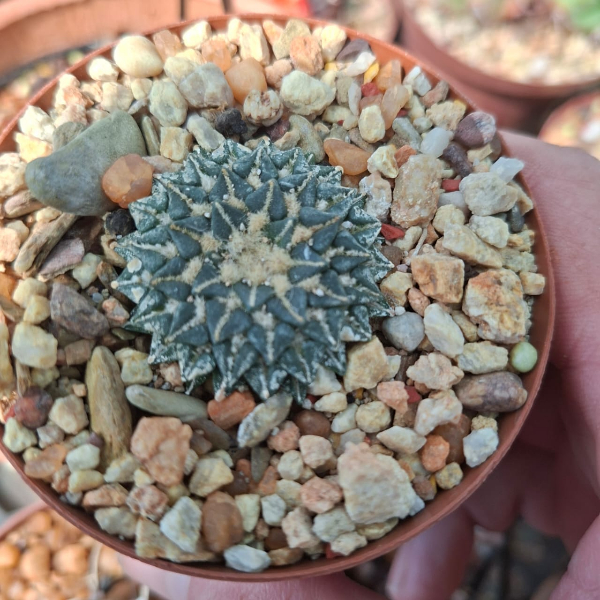
Ariocarpus Kotschoubeyanus. Seed grown 4 years.
2 in stock
Ariocarpus kotschoubeyanus are very flat geophyte cacti that produce small star-shaped rosettes. They in most cases don’t reach more than only a few centimetres above the ground. Although they can form clumps, often only a small disc of tubercles can be seen flat at the soil surface, however these plants grow a large tap root below the surface of the compost.
R220.00
2 in stock
Ariocarpus kotschoubeyanus are very flat geophyte cacti that produce small star-shaped rosettes. They in most cases don’t reach more than only a few centimetres above the ground. Although they can form clumps, often only a small disc of tubercles can be seen flat at the soil surface, however these plants grow a large tap root below the surface of the compost.
Ready to ship in 3-5 business days
Shipping Policy
**Shipping Policy for Plants**
At MantisPlants, we take great care in preparing and shipping your plants to ensure they arrive in the best possible condition.
Bare Root Shipping
All plants are typically shipped bare-rooted, meaning that the soil is carefully removed from the roots to prevent any damage during transit. We wash the roots to remove any remaining soil and allow them to dry before wrapping them gently in tissue paper. This process helps minimize stress on the plant and ensures its safe arrival to you.
Pot Shipping Option (Not Recommended)
While we do offer the option of shipping some plants in their pots, this is generally not advisable. Shipping a plant in its pot can result in root damage due to movement and stress during transit. The roots can become constricted or disturbed, which can harm the plant. If you are still interested in this option, it must be arranged in advance with the vendor, and we will take extra precautions to pack it as securely as possible. However, we highly recommend the bare-root shipping method to ensure the best possible outcome for your plant.
**Careful Packaging**
We take pride in our packing process to ensure your plant arrives safely. Every plant is carefully packed, with extra attention to detail to protect the roots and foliage. We take care to secure the plant during transit, and make sure it is cushioned and stabilized inside the shipping box to avoid damage.
Our goal is to make sure your plant reaches you healthy and ready to thrive! If you have any questions about the shipping process, feel free to reach out to us.
| Weight | 0.3 kg |
|---|---|
| pot size | 7.5cm |
Based on 0 reviews
Only logged in customers who have purchased this product may leave a review.
Product Location
oudthoorn, South Africa-
Plants, Succulents & Cacti
Astrophytum Asterias Nudum
Oudtshoorn, WC
Astrophytum asterias Nudum is a rare, spineless cactus prized for its smooth, unmarked surface and distinctively round, button-like shape. Its green to bluish-grey body is divided into symmetrical segments, creating a minimalist yet captivating appearance. In spring, this unique cactus crowns itself with bright yellow flowers, often with a striking orange center, adding to its visual appeal. Native to the deserts of Mexico and Texas, Astrophytum asterias Nudum is a true collector’s gem, blending simplicity with elegance.
SKU: n/a -
Plants, Succulents & Cacti
Coryphantha elephantidens cv. Tanshi Zougemaru inermis (Seed Grown)
Oudtshoorn, WC
Coryphantha elephantidens cv. Tanshi Zougemaru inermis is a rare, spineless cultivar of Coryphantha elephantidens, originally native to central Mexico, especially in Jalisco and surrounding regions. This particular cultivar is known for its smooth, rounded, and highly symmetrical tubercles (bumps) that give it a sculpted, almost “puffy” appearance.
Unlike the typical species, the inermis form lacks spines, making it especially attractive to collectors. It may produce large, showy pink to magenta flowers in summer. It prefers full sun to light shade, well-draining soil, and minimal watering.
SKU: n/a -
Plants, Succulents & Cacti
Mammillaria Luethyi
Oudtshoorn, WC
Mammillaria luethyi is a small, spherical cactus native to Mexico, known for its attractive clusters of white spines and vibrant pink flowers. This species typically grows in rocky or arid environments and is highly sought after by collectors due to its compact size and ornamental beauty.
SKU: 1-1-2-1-2-1-2


Related products
-
Plants, Succulents & Cacti
Haworthia Viscosa Hybrid
Oudtshoorn, WC
This Haworthia hybrid is a small, succulent plant known for its distinctive rosettes of plump, fleshy leaves that can vary in shape, color, and texture, often featuring fascinating translucent or windowed tips. It’s ideal for indoor and outdoor growing in pots, and its compact size makes it a popular choice for succulent collectors.
Care Instructions:
Haworthia hybrids prefer bright, indirect sunlight and well-draining soil. Water sparingly, letting the soil dry out completely between waterings, especially in cooler months. Avoid direct, intense sunlight, which can burn the leaves, and protect from frost. A well-balanced cactus fertilizer can be used sparingly in the growing season.SKU: n/a -
Plants, Succulents & Cacti
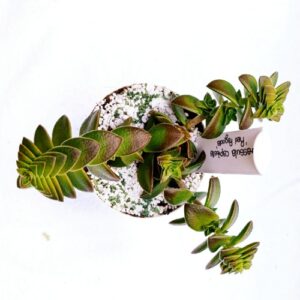
Crassula capitella ‘Red Pagoda’
Raithby, WC
The Crassula capitella ‘Red Pagoda’ is a stunning branching succulent that sports a stack of fleshy, triangular chartreuse leaves that are adorned with red tips. It requires full sun to partial shade and well draining soil. It is ideal for rock gardens or planters. It is drought resistant and easy to maintain.
SKU: n/a



There are no reviews yet.