







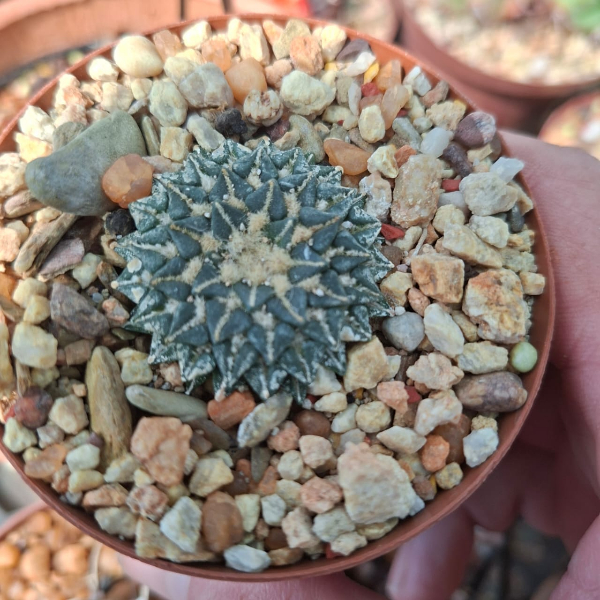
Ariocarpus Kotschoubeyanus. Seed grown 4 years.
1 in stock
Ariocarpus kotschoubeyanus are very flat geophyte cacti that produce small star-shaped rosettes. They in most cases don’t reach more than only a few centimetres above the ground. Although they can form clumps, often only a small disc of tubercles can be seen flat at the soil surface, however these plants grow a large tap root below the surface of the compost.
R220.00
1 in stock
Ariocarpus kotschoubeyanus are very flat geophyte cacti that produce small star-shaped rosettes. They in most cases don’t reach more than only a few centimetres above the ground. Although they can form clumps, often only a small disc of tubercles can be seen flat at the soil surface, however these plants grow a large tap root below the surface of the compost.
Ready to ship in 3-5 business days
Shipping Policy
**Shipping Policy for Plants**
At MantisPlants, we take great care in preparing and shipping your plants to ensure they arrive in the best possible condition.
Bare Root Shipping
All plants are typically shipped bare-rooted, meaning that the soil is carefully removed from the roots to prevent any damage during transit. We wash the roots to remove any remaining soil and allow them to dry before wrapping them gently in tissue paper. This process helps minimize stress on the plant and ensures its safe arrival to you.
Pot Shipping Option (Not Recommended)
While we do offer the option of shipping some plants in their pots, this is generally not advisable. Shipping a plant in its pot can result in root damage due to movement and stress during transit. The roots can become constricted or disturbed, which can harm the plant. If you are still interested in this option, it must be arranged in advance with the vendor, and we will take extra precautions to pack it as securely as possible. However, we highly recommend the bare-root shipping method to ensure the best possible outcome for your plant.
**Careful Packaging**
We take pride in our packing process to ensure your plant arrives safely. Every plant is carefully packed, with extra attention to detail to protect the roots and foliage. We take care to secure the plant during transit, and make sure it is cushioned and stabilized inside the shipping box to avoid damage.
Our goal is to make sure your plant reaches you healthy and ready to thrive! If you have any questions about the shipping process, feel free to reach out to us.
| Weight | 0.3 kg |
|---|---|
| pot size | 7.5cm |
Based on 0 reviews
Only logged in customers who have purchased this product may leave a review.
Product Location
oudthoorn, South Africa-
Plants, Succulents & Cacti
Haworthia Sordida Hybrid
Oudtshoorn, WC
Haworthia Sordida Hybrid is a rare and attractive succulent with compact rosettes and beautifully textured leaves. Its unique patterns and hardy nature make it a perfect choice for collectors and small pot displays. Easy to care for and ideal for bright, indirect light.
SKU: n/a -
Plants, Succulents & Cacti
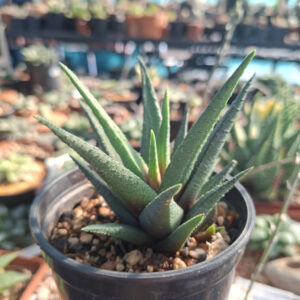
Haworthia Viscosa Calitzdorp
Oudtshoorn, WC
Haworthia viscosa ‘Calitzdorp’ is a striking succulent known for its compact, triangular leaves arranged in elegant vertical stacks. Native to South Africa, this rare variety features thick, dark green leaves with a smooth, glossy surface, giving it a sculptural, geometric form. Its architectural beauty makes it a standout in any collection, and its slow-growing nature only enhances its appeal. Perfect for collectors of rare succulents, Haworthia viscosa ‘Calitzdorp’ is a symbol of understated elegance and natural resilience.
SKU: n/a -
Plants, Succulents & Cacti
Euphorbia Pulvinata (Meloformis Variegated)
Oudtshoorn, WC
Euphorbia pulvinata is a small, cushion-forming succulent native to South Africa. It grows in dense, rounded clumps that resemble little green pillows, hence the name “pulvinata,” which means “cushion-like.” This plant has short, thick stems covered in small tubercles and spines, giving it a textured appearance. In spring to early summer, it produces tiny, yellow-green flowers (cyathia) at the tips of its stems. Like most euphorbias, it contains a milky sap that can be irritating to the skin and toxic if ingested. It thrives in full sun with well-draining soil and is ideal for rock gardens, containers, or succulent collections.
SKU: 1-1-2-1-2-2-1-1 -
Plants, Succulents & Cacti
Euphorbia Neurobella, Red Monadenium (Rare, 10 Years old)
Oudtshoorn, WC
Euphorbia neurobella (Red Monadenium)
A striking and unusual succulent, Euphorbia neurobella is admired for its thick, sculptural stems and rich reddish tones that intensify in bright light. Its knobbly, textured surface gives it a bold, almost otherworldly appearance, making it a standout piece in any collection. During its growing season, it produces small, delicate flowers that add subtle charm to its rugged form.
Perfect for collectors looking for something different, this plant thrives in warm, bright conditions with well-draining soil and light watering.
Interesting fact:
Euphorbia neurobella was once classified under the genus Monadenium, which is why it’s still commonly known as “Red Monadenium” among collectors.SKU: n/a -
Plants, Succulents & Cacti
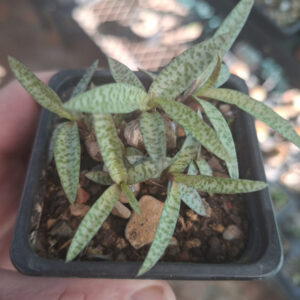
Ledebouria Socialis Miniature
Oudtshoorn, WC
Ledebouria socialis ‘Miniature’ is a charming dwarf succulent bulb plant loved for its compact size and beautifully spotted silver-green leaves with deep purple undersides. This miniature variety forms dense clusters over time, making it perfect for small pots, windowsills, fairy gardens, or collectors of unusual succulents. During the growing season, it produces delicate greenish flowers on slender stems that add extra character to the plant. It thrives in bright indirect light, well-draining soil, and moderate watering.
Interesting Fact:
Ledebouria socialis is commonly known as the “Silver Squill,” and its spotted leaves help camouflage the plant among rocks and dry ground in its natural habitat.Original Habitat:
Native to the Eastern Cape Province of South Africa, where it grows in rocky areas and dry woodland environments.
The “Booby Cactus” mutation is a natural genetic growth irregularity called a monstrose form, meaning no two plants grow exactly the same.
Original Habitat:
Originally native to central and northern Mexico, where the normal species grows in dry rocky deserts and semi-arid regions.SKU: n/a


Related products
-
Plants, Succulents & Cacti
Astrophytum Asterias Nudum
Oudtshoorn, WC
Astrophytum asterias Nudum is a rare, spineless cactus prized for its smooth, unmarked surface and distinctively round, button-like shape. Its green to bluish-grey body is divided into symmetrical segments, creating a minimalist yet captivating appearance. In spring, this unique cactus crowns itself with bright yellow flowers, often with a striking orange center, adding to its visual appeal. Native to the deserts of Mexico and Texas, Astrophytum asterias Nudum is a true collector’s gem, blending simplicity with elegance.
SKU: n/a -
Plants, Succulents & Cacti
Haworthia Viscosa Calitzdorp
Oudtshoorn, WC
Haworthia viscosa ‘Calitzdorp’ is a striking succulent known for its compact, triangular leaves arranged in elegant vertical stacks. Native to South Africa, this rare variety features thick, dark green leaves with a smooth, glossy surface, giving it a sculptural, geometric form. Its architectural beauty makes it a standout in any collection, and its slow-growing nature only enhances its appeal. Perfect for collectors of rare succulents, Haworthia viscosa ‘Calitzdorp’ is a symbol of understated elegance and natural resilience.
SKU: n/a


There are no reviews yet.