


Aloe Descoingsii
1 in stock
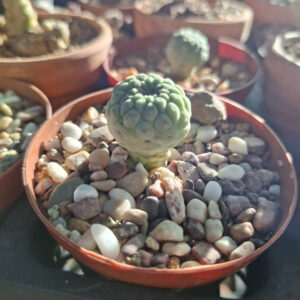
Aloe descoingsii is a dwarf leaf-succulents (The smallest of all Aloes) with flattish heads to 5 cm in diameter and recalls Haworthia in size and shape.
R80.00
1 in stock
Aloe descoingsii is a dwarf leaf-succulents (The smallest of all Aloes) with flattish heads to 5 cm in diameter and recalls Haworthia in size and shape.
Ready to ship in 3-5 business days
Shipping Policy
**Shipping Policy for Plants**
At MantisPlants, we take great care in preparing and shipping your plants to ensure they arrive in the best possible condition.
Bare Root Shipping
All plants are typically shipped bare-rooted, meaning that the soil is carefully removed from the roots to prevent any damage during transit. We wash the roots to remove any remaining soil and allow them to dry before wrapping them gently in tissue paper. This process helps minimize stress on the plant and ensures its safe arrival to you.
Pot Shipping Option (Not Recommended)
While we do offer the option of shipping some plants in their pots, this is generally not advisable. Shipping a plant in its pot can result in root damage due to movement and stress during transit. The roots can become constricted or disturbed, which can harm the plant. If you are still interested in this option, it must be arranged in advance with the vendor, and we will take extra precautions to pack it as securely as possible. However, we highly recommend the bare-root shipping method to ensure the best possible outcome for your plant.
**Careful Packaging**
We take pride in our packing process to ensure your plant arrives safely. Every plant is carefully packed, with extra attention to detail to protect the roots and foliage. We take care to secure the plant during transit, and make sure it is cushioned and stabilized inside the shipping box to avoid damage.
Our goal is to make sure your plant reaches you healthy and ready to thrive! If you have any questions about the shipping process, feel free to reach out to us.
| Weight | 0.3 kg |
|---|---|
| pot size | 7.5cm |
Product Location
oudthoorn, South Africa-
Plants, Succulents & Cacti
Aloe Hybrid Variegated
Oudtshoorn, WC
The Aloe Hybrid Variegated is a striking and unique succulent known for its colorful, variegated leaves that blend shades of green, yellow, and white. This hybrid aloe thrives in bright, indirect light and well-draining soil, making it perfect for indoor spaces or outdoor gardens. It’s low-maintenance, drought-tolerant, and grows slowly, making it an excellent choice for collectors or anyone looking to add a splash of color to their plant collection.
SKU: n/a -
Plants, Succulents & Cacti
Larryleachia cactiformis
Oudtshoorn, WC
Larryleachia cactiformis is a rare, stem-succulent plant native to arid regions of South Africa (mainly the Northern Cape). It belongs to the Apocynaceae family, related to stapeliads, and is well known for its cactus-like appearance—despite not being a cactus.
Characteristics:
- Forms small, rounded to slightly elongated, grey-green stems.
- Stems are tuberculate (covered in small wart-like projections), giving a cactus-like look.
- Typically grows low to the ground in compact clusters.
- Produces unusual star-shaped flowers, often pale yellow to greenish with patterned markings.
- Flowers may have a faint odor typical of stapeliads, attracting pollinators like flies.
Cultivation:
- Summer-growing species.
- Requires very well-drained, gritty soil (succulent mineral mix preferred).
- Water moderately during active growth (spring–summer).
- Keep mostly dry during winter dormancy.
- Prefers bright light with some protection from extreme heat.
Habitat:
- Found in rocky, arid scrublands of the Northern Cape, South Africa.
- Adapted to harsh conditions with minimal rainfall.
SKU: n/a -
Plants, Succulents & Cacti
Euphorbia parvimedusae hybrid
Oudtshoorn, WC
A Euphorbia parvimedusae hybrid is a cultivated succulent variety developed by crossing Euphorbia parvimedusae—a rare and unusual species from South Africa—with another Euphorbia species, often to enhance certain traits such as size, growth habit, or ease of cultivation. These hybrids typically retain the unique, medusoid appearance of the parent species, characterized by a central caudex (swollen stem base) from which numerous cylindrical arms or branches radiate, resembling a sea anemone or the mythological head of Medusa.
Depending on the hybrid cross, the plant may show variations in:
-
Branch density – more compact or sprawling arms
-
Caudex shape – larger, more prominent, or more textured
-
Color – shades of green, grey-green, or even reddish tones
-
Spines – some hybrids may have more or fewer spines
Like most Euphorbias, these hybrids exude a white, toxic latex when damaged and should be handled with care. They prefer well-draining soil, minimal watering, and bright light—making them excellent candidates for collectors or enthusiasts interested in rare succulents.
SKU: n/a -
-
Plants, Succulents & Cacti
Avonia Quinaria
Oudtshoorn, WC
Avonia quinaria is a tiny, mat-forming succulent native to arid regions of South Africa and Namibia. It was formerly placed in the genus Anacampseros and is closely related to other miniature “sand-dwelling” succulents.
Characteristics:
- Forms low, creeping mats of very small stems.
- Leaves are tiny and densely covered in white, papery scales, giving a silvery, almost cotton-like appearance.
- The plant often blends into sandy or rocky soils for camouflage.
- Produces small pink to white flowers that open briefly, usually in the afternoon under good light.
- Extremely small and slow-growing, often forming tight colonies over time.
Cultivation:
- Summer-growing succulent.
- Requires very well-drained, sandy or gritty soil.
- Water lightly during active growth (spring–summer).
- Keep mostly dry in winter dormancy.
- Prefers bright light; tolerates strong sun if acclimated.
- Sensitive to overwatering due to shallow roots.
Habitat:
- Found in arid, sandy or rocky areas of southern Namibia and South Africa.
SKU: n/a



Related products
-
Climbers & Creepers, Plants
Clematis Fond Memories
Pretoria, GP
Growing to a mature height of around 3–4 metres, ‘Fond Memories’ is ideal for smaller spaces where you still want a lush vertical display. It clings by leaf stalks, making it easy to train up supports or through shrubs and small trees. Its medium-sized flowers, approximately 8–10 cm across, appear in abundance from mid-spring through late autumn, ensuring months of colour in your garden.
For sale in South Africa.
SKU: n/a -
Plants, Shrubs & Perennials
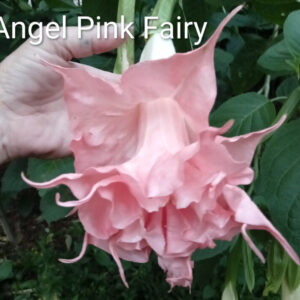
Brugmansia Angel Pink Fairy
Raslow, GP
Brugmansia Angel Pink Fairy
This is a new hybrid plant with many fairy double pink flowers. The bright pink flowers look like fairies in pink dresses that dance in the air.
Actual size of plant when couriered – 20 -30cm.
Can reach 4m x 2.5m in frost free areas in 2 years. But can be cut to desired size and shape.
Angel Pink Fairy is an exotic plant with little fuss and loads of flowers. She is definitely worth the little effort she requires.
SKU: n/a -
Plants
Lavender – Margaret Roberts
Raithby, WC
Lavender – Margaret Roberts.
This is a upright and fast growing lavender hybrid which flowers throughout the year. The blue purple flowers smell divine and are excellent for cutting and drying – for example for linen sachets and potpourris and to scent your room.
The plants do best in a well drained soil in a sunny part of your garden.
If you’re preparing the flowers for drying, cut them whilst fresh and hang them upside down to dry.Excellent also in pots, as a low hedge or in sunny dry spots in your garden. A Mediterranean inspired garden choice and very pretty when planted amongst ornamental grasses and in natural or formal gardens.
SKU: n/a -
Plants, Shrubs & Perennials
Brugmansia Angel Little Lady
Raslow, GP
Brugmansia Angel Little Lady
This beautiful new cultivar, cultivated right here in South Africa, produces masses of highly scented flowers that are quite small. Little Lady would be ideal for pots on the stoep with its masses of small highly scented white flowers.
Actual size of plant when couriered – 25-30cm.
Can reach 2m x 1.5m in frost free areas in 2 years. But can be cut to desired size and shape.
Angel Little Lady is an exotic plant with little fuss and loads of flowers. She is definitely worth the little effort she requires.
SKU: n/a