





Agave Titanota
4 in stock
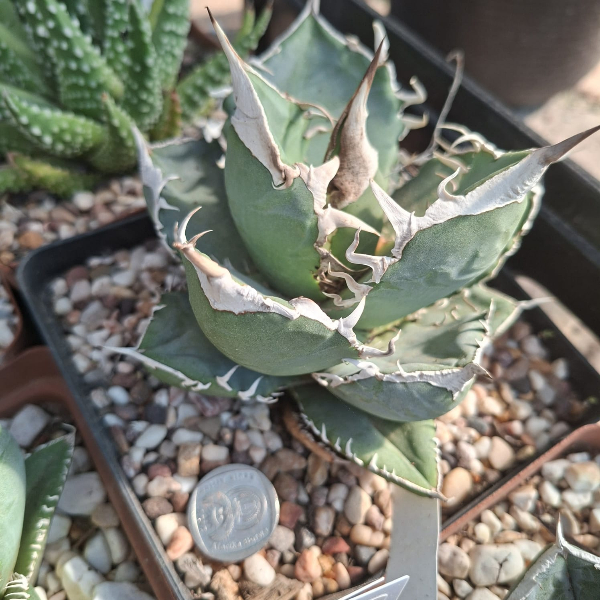
Agave titanota is ’n baie gewilde, stadig-groeiende vetplant uit die Asparagaceae-familie en is inheems aan die semi-droë streke van Oaxaca, Meksiko. Hierdie spesie is bekend vir sy indrukwekkende, beeldhoukundige vorm en het breë, dik blare wat wissel van blougrys tot silwerig-groen, met opvallende, dramatiese tande langs die blaarrande en ’n kenmerkende eindsteek. Die blare vorm dikwels ’n digte roset, wat dit gewild maak onder versamelaars en landskapontwerpers. Dit groei die beste in volson en goed dreinerende grond, en is uiters droogtebestand sodra dit gevestig is. Water slegs wanneer die grond heeltemal droog is. Hoewel dit taai is, moet Agave titanota teen uiterste koue en ryp beskerm word. Met verloop van tyd kan dit uitlopers rondom die basis vorm, en soos alle agaves blom dit slegs een keer in sy leeftyd—gewoonlik ná baie jare—en sterf daarna af, maar laat ’n nuwe generasie agter deur die uitlopers.
R250.00 R400.00
4 in stock
Ready to ship in 3-5 business days
Shipping Policy
**Shipping Policy for Plants**
At MantisPlants, we take great care in preparing and shipping your plants to ensure they arrive in the best possible condition.
Bare Root Shipping
All plants are typically shipped bare-rooted, meaning that the soil is carefully removed from the roots to prevent any damage during transit. We wash the roots to remove any remaining soil and allow them to dry before wrapping them gently in tissue paper. This process helps minimize stress on the plant and ensures its safe arrival to you.
Pot Shipping Option (Not Recommended)
While we do offer the option of shipping some plants in their pots, this is generally not advisable. Shipping a plant in its pot can result in root damage due to movement and stress during transit. The roots can become constricted or disturbed, which can harm the plant. If you are still interested in this option, it must be arranged in advance with the vendor, and we will take extra precautions to pack it as securely as possible. However, we highly recommend the bare-root shipping method to ensure the best possible outcome for your plant.
**Careful Packaging**
We take pride in our packing process to ensure your plant arrives safely. Every plant is carefully packed, with extra attention to detail to protect the roots and foliage. We take care to secure the plant during transit, and make sure it is cushioned and stabilized inside the shipping box to avoid damage.
Our goal is to make sure your plant reaches you healthy and ready to thrive! If you have any questions about the shipping process, feel free to reach out to us.
| Weight | 0.3 kg |
|---|---|
| pot size | 7.5cm |
Based on 0 reviews
Only logged in customers who have purchased this product may leave a review.
Product Location
oudthoorn, South Africa-
Plants, Succulents & Cacti
Astrophytum Myriostigma Tricostatum
Oudtshoorn, WC
Astrophytum myriostigma var. tricostatum is a rare and visually striking variety of the Bishop’s Cap cactus, native to Mexico. Unlike the typical five-ribbed form, this variety usually has only three prominent ribs (hence “tricostatum”). It has a smooth, spineless surface covered with tiny white speckles that give it a starry appearance. The cactus produces yellow, daisy-like flowers at the top during spring or summer. Due to its unique shape and low-maintenance care needs, it is highly sought after by collectors and succulent enthusiasts.
SKU: n/a -
Plants, Succulents & Cacti
Haworthia Tessellata
Oudtshoorn, WC
Haworthia tessellata is a small, slow-growing succulent native to southern Africa. It is known for its distinctive, thick, triangular leaves that form a rosette. The leaves are dark green to brownish and feature a unique, tessellated (checkerboard-like) pattern on their surface, which gives the plant its name. This pattern helps it blend into its natural rocky surroundings. Haworthia tessellata prefers indirect light and well-draining soil, making it an excellent and easy-to-care-for houseplant.
SKU: n/a -
Plants, Succulents & Cacti
Gasteria Batesiana
Oudtshoorn, WC
Gasteria batesiana is a small, hardy succulent native to South Africa. It has dark green, triangular leaves with rough, textured surfaces, often adorned with white spots or streaks. The plant grows in a rosette form and can tolerate low light, making it ideal for indoor cultivation. It produces tubular, pinkish-red flowers on tall stalks, typically during the spring or summer. Known for its drought tolerance and easy care, Gasteria batesiana is popular among succulent collectors.
SKU: n/a -
Plants, Succulents & Cacti
Agave Victoriae-reginae Sun King
Oudtshoorn, WC
Agave ‘Sun King’
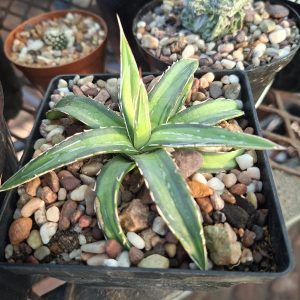
A striking ornamental Agave prized for its bold rosette and beautiful golden-yellow and green colouring. Agave ‘Sun King’ develops broad, architectural leaves with an eye-catching colour contrast, creating a dramatic feature plant for collectors, succulent gardens and containers.
An excellent choice for a sunny, well-drained position. Provide bright light to full sun and use a fast-draining, mineral-rich growing medium. Water thoroughly but infrequently, allowing the soil to dry completely between waterings. Avoid prolonged moisture around the roots, especially during cooler periods.
SKU: n/a -
Plants, Succulents & Cacti
Astroloba Corrugata
Oudtshoorn, WC
Astroloba corrugata is a rare South African succulent prized for its tightly stacked, rough-textured leaves that form elegant upright columns. Native to the arid Western Cape, this slow-growing species is perfect for collectors and thrives in bright light with well-drained soil. Its unique architectural appearance makes it a standout addition to any succulent collection.
SKU: n/a



Related products
-
Plants, Succulents & Cacti
Copiapoa Hypogaea cv. Lizard Skin
Oudtshoorn, WC
The Copiapoa hypogaea cv. Lizard Skin is a rare and unique cultivar native to the arid regions of northern Chile. Its textured, reptilian-like surface sets it apart as a true collector’s gem. Compact and slow-growing, this succulent thrives in well-drained soil and bright sunlight, making it a must-have for cacti enthusiasts. With its limited availability and striking appearance, the “Lizard Skin” cultivar adds both intrigue and exclusivity to any collection. Don’t miss the opportunity to own this fascinating specimen!
SKU: n/a -
-
Plants, Succulents & Cacti
Gymnocalycium mihanovichii variegata
Oudtshoorn, WC
Gymnocalycium mihanovichii variegata, commonly known as the Variegated Moon Cactus, is a striking and unique cactus characterized by its vibrant, multicolored tops, which are often bright yellow, pink, or red. The colorful crown is a result of a lack of chlorophyll, making it an interesting addition to any succulent collection. The base of the cactus is typically a green Gymnocalycium, which provides stability and nutrients to the colorful top. This plant is often grafted onto a more resilient cactus species to enhance its growth and longevity.
Care Instructions:
- Light: Requires bright, indirect sunlight. Avoid direct sunlight to prevent scorching the colorful tops.
- Water: Water sparingly, allowing the soil to dry out completely between waterings. During the growing season (spring and summer), water more frequently, but reduce watering in fall and winter.
- Soil: Use a well-draining cactus mix to prevent root rot.
- Temperature: Thrives in warm conditions, ideally between 18-30°C (65-86°F). Protect from frost and cold drafts.
SKU: n/a -
Plants, Succulents & Cacti
Astrophytum Asterias Nudum
Oudtshoorn, WC
Astrophytum asterias Nudum is a rare, spineless cactus prized for its smooth, unmarked surface and distinctively round, button-like shape. Its green to bluish-grey body is divided into symmetrical segments, creating a minimalist yet captivating appearance. In spring, this unique cactus crowns itself with bright yellow flowers, often with a striking orange center, adding to its visual appeal. Native to the deserts of Mexico and Texas, Astrophytum asterias Nudum is a true collector’s gem, blending simplicity with elegance.
SKU: n/a


There are no reviews yet.