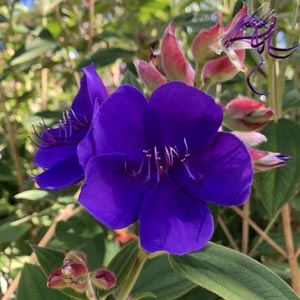
White Abutilon Malvaceae.
These little plants are currently around 20 cm high.
Rare white form of this beautiful plant. Needs partial shade and medium water. For sale in South Africa
6 in stock
Abutilon (white) Malvaceae
Very rare white form of abutilon. Likes partial shade, average water requirements. Prune regularly otherwise you’ll have a spindly plant!
R135.00
White Abutilon Malvaceae.
These little plants are currently around 20 cm high.
Rare white form of this beautiful plant. Needs partial shade and medium water. For sale in South Africa
Shipping Countries: South Africa
Shipping States: Western Cape (South Africa), Eastern Cape (South Africa), North West (South Africa), Limpopo (South Africa), Free State (South Africa), Northern Cape (South Africa), Mpumalanga (South Africa), Gauteng (South Africa), KwaZulu-Natal (South Africa)
Ready to ship in 1-3 business days
Shipping Policy
This plant/s are sold by horti.co.za direct. We will process your order within 1-3 business days.
Many of our plants can be couriered nationwide - and at checkout these options will be displayed. IF couriering doesn't come up as an option, this means that your basket contains one or more items that cannot be couriered - due to size/or practical reasons.
In this case, please either remove from your basket, or contact us for help.
For example, our horse compost cannot be sent via courier and will therefore appear as click and collect only!
NB: We normally send the plants on a Monday or Tuesday to minimise the chance they'll get stuck in a depot over the weekend.
We offer click and collect for local customers only. :-)
Refund Policy
No refunds on click & collect goods.
Normal refund policy (see terms and conditions) on other 'delivery' products.
10x mulberry leaves.
Mulberry levels are rich in plant compounds like polyphenol antioxidants, as well as vitamin C, zinc, calcium, iron, potassium, phosphorus, and magnesium.
Useful in a variety of ways, suitable for human consumption – please research carefully… or for shrimps (shellfish). Mulberry leaves are a favourite and natural food source for shrimp as it softens quickly, and is easily consumed by the shrimp.
A compact, ever-blooming treasure, Phygelius ‘Candy Drops Cream’ is prized for its striking clusters of cream white tubular flowers that appear from early summer right through to autumn. These nectar-rich blooms are a magnet for sunbirds and butterflies, bringing vibrant life and colour to your garden for months on end.
For sale in South Africa. Couriered nationwide.
Not often seen for sale – this wild dagga or lions tail plant has peach coloured flowers.
The bush is comprised of mostly erect branched stems topped with multiple ball-shaped inflorescences which bear the nectar-rich flowers – sunbirds love them. They also attract honey bees and other beneficial insects.
The Bush Bronze butterfly (Cacyreus lingeus Fam: Lycenidae) uses this plant as one of its larval food plants.
It can grow up to 2m high and 1m wide – slightly smaller than the common, orange version.
The generic name Leonotis is derived from the Greek words leon meaning lion and –otis meaning ear. This refers to the pubescent upper lip of each flower that resembles a lion’s ear, hence the vernacular name. The specific epithet leonurus means lion-coloured, a reference to the flower colour of some forms.
For sale in South Africa. Couriered nationwide.
The Ginko Bilboa tree, also known as a maidenhair tree is a species of gymnosperm tree native to East Asia.
These little trees are currently in 10litre pots are approx 85cm tall.
Ginkos are the last living species in the order Ginkgoales, which first appeared over 290 million years ago, and fossils very similar to the living species, belonging to the genus Ginkgo, extend back to the Middle Jurassic epoch approximately 170 million years ago.
These beautiful trees normally eventually reach a height of 20–35 m. The tree has an angular crown and long, somewhat erratic branches, and is usually deep-rooted and resistant to wind and snow damage. Young trees are often tall and slender, and sparsely branched; the crown becomes broader as the tree ages. A combination of resistance to disease, insect-resistant wood, and the ability to form aerial roots and sprouts makes ginkgos durable, with some specimens claimed to be more than 2,500 years old.
The leaves are very distinctive in shape. Ginkgos are prized for their autumn foliage, which is a beautiful butter yellow.
For sale in South Africa. Couriered nationwide.